Introduction: Navigating a Dystopian Feast of Identity and Power
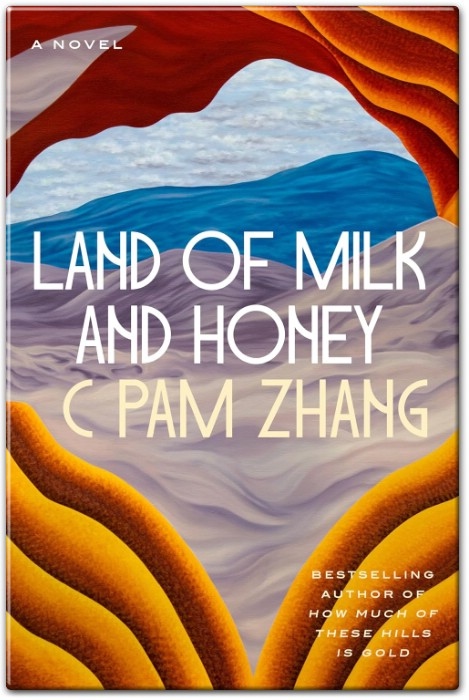
C Pam Zhang’s Land of Milk and Honey immerses readers into a haunting dystopia where environmental collapse reshapes society, values, and survival. Through the eyes of a displaced, unnamed chef, the novel delves deep into the human psyche, examining how scarcity distorts privilege, food becomes memory, and identity unravels under pressure. In this Land of Milk and Honey Summary, we break down its layered plot, characters, and themes to provide a comprehensive guide for readers seeking an insightful literary journey.
Quick Overview: TL;DR
- Genre: Dystopian fiction, literary fiction
- Themes: Survival, identity, food and memory, privilege, ethics, love
- Main Keyword: Land of Milk and Honey Summary
- Audience: Fans of speculative fiction, dystopian survival stories, environmental literature
- Tone: Reflective, poetic, and morally complex
Non-Spoiler Plot Summary: A Search for Purpose Amid Collapse
Set in a world ravaged by an ecological disaster—a dense, acidic smog that decimates biodiversity—Land of Milk and Honey introduces a world where scarcity reigns. Our narrator, a former chef marooned in England, is drawn to a mysterious enclave on the Italian-French border that promises abundance amidst global famine. Accepting a private chef role, she enters a surreal ecosystem of wealth and genetic experimentation. There, she’s forced to confront her identity, morality, and buried desires.
Chapter-by-Chapter Summary
Chapter One: Escape into Luxury
The chef escapes famine-stricken England to a hidden community promising fresh food. She’s welcomed into a world where strawberries still grow—a glimpse of paradise.
Chapter Two: Food as Power
She discovers a storeroom of rare ingredients and extinct animals. Her fabricated culinary credentials go unnoticed as her “flexibility” is what truly matters.
Chapter Three: Discovering the Enclave’s True Purpose
She collaborates with Aida, her employer’s daughter, learning that the mountain’s mission is preserving species and genetic data. Aida emerges as a key moral and intellectual force.
Chapter Four: Past and Progress Collide
The chef reflects on her estranged mother as she’s exposed to the lab’s ethically grey breeding experiments. Her growing emotional bond with Aida begins.
Chapter Five: Becoming Eun-Young
She assumes the identity of Eun-Young, the employer’s missing wife, presenting herself as a maternal and professional figure to impress stakeholders.
Chapter Six: Embedded in the System
As Eun-Young, she becomes central to the community’s image. Her unease with the artificial abundance grows, even as her relationship with Aida strengthens.
Chapter Seven: Desire Emerges
She and Aida begin an intimate relationship, deepening the emotional complexity. Meanwhile, scientific achievements like birthing Tasmanian tigers contrast rising global political tension.
Chapter Eight: Sacrifice and Disease
A viral outbreak wipes out livestock. The group prepares for an investor feast while nationalism gains political power outside the mountain.
Chapter Nine: The Feast and Moral Reckoning
The community serves golden chimpanzee meat to investors. The chef must perform an intimate act of penance to ensure survival funding, leading to a fracture of trust.
Chapter Ten: Truth Revealed
The chef visits Milan and eats real food for the first time in years. She sees the façade of the mountain for what it is and begins to reject it.
Chapter Eleven: Breaking Roles
She abandons her false identity and confronts the employer’s manipulations. Aida confesses her own disillusionment. They part with unresolved love.
Chapter Twelve: Legacy and Reflection
Years later in Paris, the chef is financially secure and raises a daughter. After revealing her past, she embraces the lessons learned and sets out to reconnect with Aida’s memory.
Main Characters
- The Narrator (Chef / Eun-Young): A cook turned chameleon, navigating ethical turmoil in a privileged yet morally decayed world.
- Aida: The employer’s daughter, a brilliant biologist whose bond with the narrator blends intellectual admiration with emotional intimacy.
- The Employer: A manipulative figure who uses global tragedy to orchestrate genetic elitism.
- The Cat: A poignant symbol of the narrator’s longing and moral discomfort.
- The Meteorologist: A realist voice who grounds the narrator’s reflections amid escalating crisis.
Key Themes and Analysis
1. Environmental Collapse and Its Unequal Consequences
The acidic smog reflects the cost of human excess. Those outside the mountain face starvation, while the elite hoard abundance behind bioengineered walls.
2. Food as Identity and Power
Meals represent more than nourishment—they’re tools of control, nostalgia, and rebellion. The narrator’s arc is shaped by what she cooks, eats, and rejects.
3. The Mask of Privilege
Assuming the identity of Eun-Young forces the narrator to navigate racial erasure and moral compromise, illustrating how privilege often comes at the cost of authenticity.
4. Desire and Connection
The love between the chef and Aida complicates traditional binaries of victim and perpetrator. Their intimacy is a rebellion against the mechanical sterility of the mountain.
5. Ethical Boundaries of Survival
Whether cooking extinct creatures or impersonating a missing woman, survival in this world demands sacrifice—and complicity.
Writing Style & Tone
Zhang’s writing is richly lyrical, at times dreamlike, yet grounded in visceral truths. The slow-burn pacing complements the introspective, memory-driven narrative. Each chapter layers emotion upon revelation, blending atmosphere with existential stakes.
10 Standout Quotes
- “Back to that country that no longer exists. That country that was mine for a year in the sun.”
- “I was twenty-nine, a hungry ghost, adrift.”
- “The darkness, slightly acidic, ate its way through fertile fields.”
- “Your stories indicate a certain flexibility that is valuable to me.”
- “It is an advantage that they cannot tell you people apart.”
- “Each dream traveled inexorably toward the moment at which he cast my food off the mountain.”
- “The extinct revolved on their hooks to greet me.”
- “She loves them, she loves them, she loves them.”
- “My employer gave me a job; he gave me a reason to live.”
- “We’re all dead in twenty years.”
FAQs
- What is Land of Milk and Honey about?
A dystopian exploration of a cook who enters a secretive community preserving biodiversity amid environmental collapse. - Is it worth reading?
Yes, for readers drawn to slow-burning dystopias with deep psychological and political themes. - Who should read this book?
Fans of The Road, Never Let Me Go, or Station Eleven will find familiar depth here. - What is the core message?
True survival requires not just food but honesty, connection, and the courage to define one’s identity in the face of manipulation.
About the Author: C Pam Zhang
Zhang, best known for How Much of These Hills Is Gold, continues to challenge literary conventions with speculative settings and emotionally rich narratives. Her work explores marginalized identities and ethical complexity through a refined literary lens.
Conclusion: More Than Survival—An Ethical Reckoning
Land of Milk and Honey is not just a dystopian tale of a world in decline; it’s a philosophical and emotional meditation on what it means to survive, to remember, and to truly live. Zhang’s narrative draws readers into a fragile paradise built on compromise, ultimately asking: who gets to survive, and at what cost?
Final Verdict: ★★★★★ – A hauntingly beautiful, provocative, and necessary novel for our times.
Get Your Copy of Land of Milk and Honey today.
Published by: Books to Thrive | Book Summaries that Matter