Introduction: Why This Wuthering Heights Summary Matters
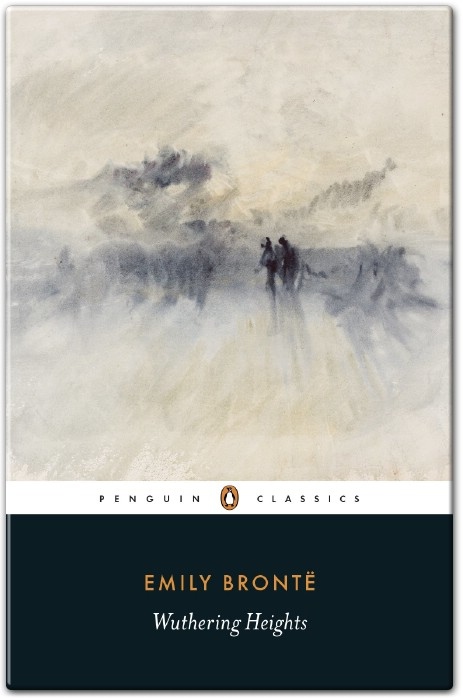
This Wuthering Heights Summary goes far beyond a simple retelling of Emily Brontë’s iconic Gothic novel. First published in 1847 under the pseudonym Ellis Bell, Wuthering Heights remains one of the most daring and emotionally raw works in English literature. Upon its release, critics were divided—some praised its originality, while others found it disturbing and immoral. Over time, however, it has become a timeless masterpiece, studied in classrooms worldwide and revered for its psychological intensity and literary innovation.
Why does this summary matter? Because Wuthering Heights is not just a tragic love story—it is a narrative about obsession, revenge, class conflict, and the eternal tension between nature and civilization. To understand its legacy, one must unpack not only the plot but also its narrative structure, characters, themes, and cultural impact. This comprehensive guide is designed to serve readers, students, and literary enthusiasts who want both clarity and depth.
Whether you are reading Wuthering Heights for academic study, personal enjoyment, or a deeper exploration of Gothic literature, this summary provides the tools to understand why Brontë’s only novel continues to haunt, inspire, and provoke nearly two centuries after its publication.
Quick Facts about Wuthering Heights
- Author: Emily Brontë (published under Ellis Bell)
- Published: 1847
- Genre: Gothic fiction, tragedy, historical fiction
- Setting: Yorkshire moors, early 19th century
- Main Characters: Heathcliff, Catherine Earnshaw, Edgar Linton, Nelly Dean, Isabella Linton, Cathy Linton, Hareton Earnshaw
- Narrative Style: Framed narrative (Nelly Dean’s account, framed by Mr. Lockwood)
- Key Themes: Obsession, revenge, class divisions, suffering, identity, nature vs. civilization
- Literary Legacy: A controversial debut later celebrated as one of the greatest English novels
10 Best Quotes from Wuthering Heights
Emily Brontë’s prose captures raw human emotions with haunting precision. Here are some of the most striking lines, grouped by theme:
1. Soul-Deep Love & Obsession
- “He’s more myself than I am. Whatever our souls are made of, his and mine are the same.”
- “If all else perished, and he remained, I should still continue to be…”
- “Be with me always—take any form—drive me mad!… I cannot live without my soul!”
2. Heartbreak & Despair
- “I have not broken your heart—you have broken it; and in breaking it, you have broken mine.”
- “I gave him my heart, and he took and pinched it to death; and flung it back to me.”
- “Why did you despise me? Why did you betray your own heart, Cathy?”
3. Identity & Eternal Bond
- “Nelly, I am Heathcliff! He’s always, always in my mind…”
4. Yearning & Lost Freedom
- “I wish I were a girl again, half-savage and hardy, and free.”
- “Heaven did not seem to be my home; and I broke my heart with weeping to come back to earth…”
These lines reveal the intensity of Catherine and Heathcliff’s relationship—an obsession so profound that it transcends love and veers into destructive fixation.
Wuthering Heights Summary: Chapter-by-Chapter Retelling
Frame Narrative: Lockwood’s Perspective
The novel begins in 1801, with Mr. Lockwood, a new tenant at Thrushcross Grange, visiting his landlord Heathcliff at Wuthering Heights. The estate is bleak, filled with hostility and strange family dynamics. Lockwood encounters Hareton Earnshaw, Cathy Linton, and the mysterious Heathcliff. On a second visit, he is trapped overnight due to a snowstorm, where he dreams of Catherine Earnshaw’s ghost. Intrigued, Lockwood turns to his housekeeper, Nelly Dean, for the backstory.
The Earnshaw Family and Heathcliff’s Arrival
Nelly narrates the Earnshaw history. Mr. Earnshaw adopts a dark-haired orphan, Heathcliff, sparking jealousy in his son Hindley but deep affection from his daughter Catherine. After Mr. Earnshaw’s death, Hindley degrades Heathcliff to servant status. Despite mistreatment, Heathcliff and Catherine form an inseparable bond, wandering the wild moors.
Catherine’s Choice and Betrayal
During a visit to the refined Linton family, Catherine is injured and stays at Thrushcross Grange, emerging more polished and socially ambitious. Torn between her passionate love for Heathcliff and her desire for social elevation, she chooses to marry Edgar Linton, even though she confesses that Heathcliff is her true soulmate. Heathcliff overhears part of her decision and disappears.
Heathcliff’s Return and Revenge
Three years later, Heathcliff returns wealthy and determined to seek vengeance. He manipulates relationships to seize control of both Wuthering Heights and Thrushcross Grange. He marries Isabella Linton out of spite, treating her cruelly. Catherine, torn between Edgar and Heathcliff, falls ill and dies after giving birth to Cathy Linton. Heathcliff’s grief turns into obsession—he begs Catherine’s spirit to haunt him forever.
The Second Generation
- Isabella, escaping Heathcliff, gives birth to Linton Heathcliff before dying.
- Heathcliff ensures Hareton Earnshaw grows up uneducated and degraded.
- Cathy Linton, raised at Thrushcross Grange, eventually encounters Hareton and Linton.
Heathcliff orchestrates Cathy’s marriage to his weak son Linton Heathcliff to gain legal control of both estates. Edgar Linton dies unaware of this scheme. Soon after, Linton dies too, leaving Cathy under Heathcliff’s control.
Resolution and Heathcliff’s Death
Cathy and Hareton, initially hostile, grow close and redeem the destructive cycle of their parents. Meanwhile, Heathcliff, tormented by Catherine’s ghost, loses his will to live. He dies and is buried beside Catherine, finally achieving the union denied to them in life.
Character Analysis
- Heathcliff – A symbol of passion and vengeance. His cruelty and obsession drive the novel’s darkest conflicts.
- Catherine Earnshaw – Selfish yet deeply bonded to Heathcliff; her divided loyalties ignite tragedy.
- Edgar Linton – Represents refinement and social order, in stark contrast to Heathcliff.
- Isabella Linton – A victim of Heathcliff’s manipulation, illustrating naive romantic idealism.
- Nelly Dean – The central narrator whose subjectivity shapes the story.
- Cathy Linton & Hareton Earnshaw – Their love symbolizes healing, reconciliation, and hope.
Themes in Wuthering Heights
- Love and Obsession – Catherine and Heathcliff’s relationship transcends love; it becomes a destructive force.
- Revenge – Heathcliff’s life is consumed by retaliation, with generational consequences.
- Class and Social Inequality – Catherine marries for status, highlighting Victorian constraints.
- Nature vs. Civilization – The wild moors embody freedom and passion; Thrushcross Grange represents refinement and restraint.
- Suffering and Redemption – The first generation suffers tragically, but the second generation finds reconciliation.
Narrative Structure and Style
Brontë’s framed narrative—Lockwood recounting Nelly Dean’s story—adds complexity and ambiguity. This dual perspective forces readers to question truth and reliability. Unlike straightforward narration, the layered storytelling mirrors the tangled emotions and moral conflicts of the characters.
Why Wuthering Heights Is Unique
- Complex Narration: A story within a story challenges readers to interpret bias.
- Flawed Characters: No character is wholly innocent or idealized.
- Psychological Realism: Brontë dives into emotional torment rarely depicted in her era.
- Gothic Atmosphere: The bleak moors and haunted passion cement its place as Gothic literature.
Critical Reception
- Early Criticism: Branded immoral, violent, and disturbing.
- Modern View: Celebrated as a pioneering exploration of psychology, passion, and social critique.
- Reader Experience: Many describe it as unsettling yet unforgettable—a novel that lingers long after reading.
Emily Brontë: Author Spotlight
- Born: July 30, 1818, Thornton, Yorkshire
- Pseudonym: Ellis Bell
- Personality: Reclusive, private, fiercely independent
- Major Work: Wuthering Heights (her only novel)
- Death: December 19, 1848, at age 30
Her upbringing on the isolated moors profoundly shaped the novel’s setting and mood. Though her life was tragically short, her singular contribution to literature immortalized her legacy.
Tips for Students and Readers
- Create a character map to track relationships and generational links.
- Annotate key passages highlighting themes of obsession and revenge.
- Compare film adaptations to see varying interpretations of Heathcliff and Catherine.
- Discuss narrator reliability: how Nelly’s biases shape the tale.
- Study moor imagery as a symbol of emotional chaos and freedom.
Conclusion: Why Wuthering Heights Still Resonates
This Wuthering Heights Summary reveals why Emily Brontë’s only novel remains a cornerstone of Gothic literature. Its intricate structure, morally complex characters, and exploration of destructive love continue to fascinate and disturb readers. While the first generation succumbs to obsession and revenge, the second generation finds hope and reconciliation, offering balance to the tragedy.
For students, this summary provides a roadmap to navigate Brontë’s complex world. For casual readers, it offers clarity and insight into one of the most powerful novels ever written.
Whether you approach it as a love story, a tale of revenge, or a psychological study, Wuthering Heights defies simple categorization. It is brutal and beautiful, unsettling yet unforgettable—a novel that continues to haunt the literary imagination.