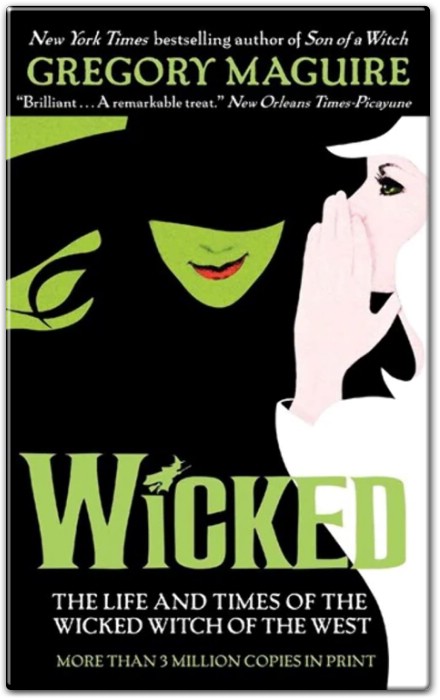
Introduction: A Revolutionary Retelling of Oz
In Wicked: The Life and Times of the Wicked Witch of the West, Gregory Maguire turns one of literature’s most notorious villains into a symbol of misunderstood rebellion. This modern classic retells The Wonderful Wizard of Oz from a radically different perspective—centered on Elphaba, the green-skinned woman the world came to know as the Wicked Witch. But Maguire’s tale is far from a simple reversal of roles; it’s a sweeping, philosophical, and politically charged exploration of morality, identity, and power.
This Wicked Book Summary offers an in-depth analysis of Maguire’s richly constructed world, chapter highlights, key character arcs, and the profound themes that transform this story into a searing social commentary.
About the Author: Gregory Maguire
Gregory Maguire, born June 9, 1954, in Albany, New York, is renowned for reinventing beloved fairy tales through darker, more introspective lenses. A scholar and novelist, Maguire holds a doctorate in English and American literature from Tufts University and has published numerous novels that challenge traditional storytelling. His breakout novel, Wicked, not only became a bestselling book but also inspired the record-breaking Broadway musical of the same name. Maguire’s storytelling style blends myth, politics, and ethical dilemmas to examine the roots of villainy and virtue.
Wicked Book Summary: A Non-Spoiler Overview
At its core, Wicked is the life story of Elphaba Thropp—born with green skin into a deeply religious Munchkinlander family. Her appearance makes her an outsider from the very beginning, but her intelligence and fierce sense of justice set her apart in deeper, more meaningful ways.
As she grows up and attends Shiz University, she befriends her opposite, the glamorously vain Galinda. Together, they witness the increasing oppression of Animals (sentient, speaking creatures) under the tyrannical rule of the Wizard. Elphaba evolves into a political radical determined to challenge the regime—and is eventually branded as “wicked” for daring to resist.
The novel confronts readers with one central question: was Elphaba ever truly wicked, or was her downfall manufactured by a corrupt system?
Wicked Book Summary: Spoiler-Filled Plot Breakdown
Part I – Munchkinland: The Birth of an Outcast
Elphaba’s story begins in Munchkinland, born to Frexspar, a devout minister, and his morally conflicted wife, Melena. Her green skin stuns and disgusts both parents. Amid Melena’s affair with a Quadling glassblower named Turtle Heart, Elphaba’s sister Nessarose is conceived. The mysterious traveling show known as the Clock of the Time Dragon ominously forecasts sorrow and social upheaval.
From the outset, Elphaba is viewed as cursed, her difference feared and rejected. Her childhood is marked by social alienation, religious contradiction, and her parents’ dysfunctional relationship.
Part II – Shiz University: Intellectual and Moral Awakening
Elphaba earns a place at Shiz University, where she’s reluctantly paired with Galinda. Their relationship, initially defined by mutual disdain, slowly develops into genuine friendship. Elphaba also becomes close to Doctor Dillamond, a Goat and professor advocating for Animal rights. When Dillamond is murdered—most likely on orders from the Wizard’s regime—Elphaba is propelled toward activism.
Madame Morrible, a cunning sorceress, attempts to manipulate Elphaba, Galinda, and Nessarose into serving the state. But Elphaba refuses. She begins to uncover the sinister underpinnings of the Wizard’s regime, and her life takes on a new mission: resistance.
Part III – The Emerald City: Rebellion and Romance
Elphaba and Galinda (now Glinda) travel to the Emerald City to challenge the Wizard directly. But the encounter ends in disappointment—the Wizard mocks Elphaba’s concerns, affirming her suspicions of his authoritarian nature.
Disillusioned, Elphaba disappears and later resurfaces as a secretive revolutionary. During this time, she falls in love with Fiyero, a married Arjiki prince. Their forbidden romance deepens Elphaba’s character, highlighting her vulnerability. When Fiyero is captured and presumed dead after protecting her, Elphaba spirals into guilt and sorrow.
She retreats to Kiamo Ko, Fiyero’s ancestral estate, and raises a boy named Liir—who may or may not be Fiyero’s son.
Part IV – In the Vinkus: Isolation and Resistance
Years later, Elphaba has become more reclusive but continues her underground resistance. She learns that Nessarose now rules Munchkinland as the “Eminence of the East,” and her authoritarian leadership mirrors their father’s zealotry.
The Wizard continues consolidating power, and Elphaba begins to use magic—specifically from a mysterious book called the Grimmerie—to combat his forces. She also creates the infamous winged monkeys as part of her war efforts.
Part V – The Climax: Dorothy and the Downfall
Dorothy’s arrival from Kansas sets the story’s final sequence in motion. Her house crashes onto Nessarose, killing her. Seeking revenge, Elphaba tries to reclaim her sister’s enchanted shoes from Dorothy. Along the way, she murders Madame Morrible and confronts the emotional ruins of her past.
Ultimately, a frightened Dorothy throws water on Elphaba, melting her in a scene filled with ambiguity and tragedy. Elphaba’s death is not triumphant but misunderstood, a casualty of a system that prefers myths over truth.
Chapter-by-Chapter Highlights
Munchkinlanders:
Explores religious fundamentalism, the trauma of being different, and the early alienation Elphaba endures. The Clock of the Time Dragon symbolizes fate and foreshadowing.
Gillikin:
The academic world introduces themes of activism, moral awakening, and betrayal. Doctor Dillamond’s death marks a turning point.
City of Emeralds:
Elphaba’s confrontation with the Wizard underscores the novel’s core questions about truth, propaganda, and state control.
The Vinkus:
Focuses on grief, identity, and the possibility of redemption. Elphaba’s resistance becomes more magical and desperate.
The Murder and Its Afterlife:
Final confrontations with Glinda, Dorothy, and the Wizard are emotionally devastating. The book ends with lingering questions about whether Elphaba was truly wicked—or tragically misunderstood.
Character Analysis
| Character | Role in the Narrative |
|---|---|
| Elphaba | The intelligent, compassionate protagonist. Branded “wicked” by a world that fears difference and rebellion. |
| Glinda | Elphaba’s foil. Starts shallow but evolves into a compassionate figure, crowned the Good Witch. |
| Nessarose | Elphaba’s devout sister. Becomes a tyrant in her own right as the Wicked Witch of the East. |
| The Wizard | A false idol of power. Uses manipulation and fear to rule Oz. |
| Madame Morrible | A schemer who manipulates youth for political ends. |
| Fiyero | Elphaba’s tragic love interest. A prince torn between family and justice. |
| Dorothy | Represents innocence, yet unknowingly plays a role in Elphaba’s demise. |
Major Themes in Wicked
1. The Nature of Good and Evil
Maguire’s central question: what truly defines wickedness? Elphaba is demonized not for her actions, but for resisting systemic injustice. Good and evil, he argues, are deeply subjective.
2. Prejudice and Otherness
Elphaba’s green skin makes her a lifelong outsider. The treatment of Animals parallels real-world racial, ethnic, and social discrimination. Oz is not a magical paradise, but a divided society struggling with intolerance.
3. Power and Corruption
The Wizard is the embodiment of absolute power unchecked. Characters like Madame Morrible and Nessarose also demonstrate how power corrupts—even those with seemingly good intentions.
4. Free Will vs. Destiny
The Clock of the Time Dragon and Elphaba’s prophetic birth raise questions about fate. Are we trapped by destiny, or do we forge our own path?
5. Feminism and Female Agency
Three complex women—Elphaba, Glinda, and Nessarose—navigate politics, personal identity, and systemic control. Their stories critique gender expectations and celebrate female autonomy.
Narrative & Literary Style
- Nonlinear Structure: Time shifts between past and present, mirroring memory and trauma.
- Symbolism: The Grimmerie, flying monkeys, and green skin all symbolize deeper truths.
- Philosophical Depth: Interrogates ethics, identity, and justice.
- Intertextuality: Builds on Baum’s original work while subverting its simplicity.
Final Thoughts: Why Wicked Still Resonates
Gregory Maguire’s Wicked is far more than a backstory for a misunderstood witch—it’s a gripping, emotionally rich meditation on power, prejudice, and personal truth. It forces us to question everything we believe about heroes, villains, and the machinery that defines them. Elphaba’s life is tragic, yes—but it’s also inspiring in its complexity and courage.
Whether you’re a fan of The Wizard of Oz or a lover of intricate political fantasy, Wicked offers a rewarding, thought-provoking experience.
Get Your Copy of Wicked by Gregory Maguire Today.