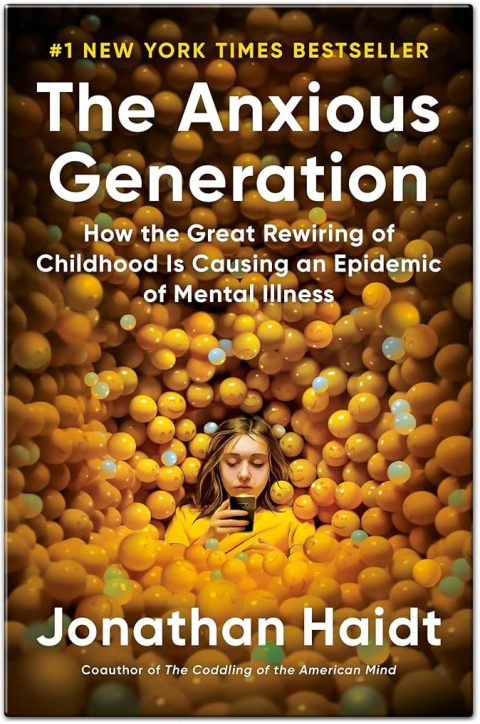
In The Anxious Generation, Jonathan Haidt delivers a gripping, data-driven examination of why today’s youth are experiencing record levels of anxiety, depression, and mental health challenges. This thought-provoking work not only diagnoses the causes of the modern childhood crisis but also offers actionable solutions for parents, educators, policymakers, and concerned citizens.
What Is The Anxious Generation About?
Jonathan Haidt, a renowned social psychologist and NYU professor, asserts that the mental health epidemic among youth stems largely from what he calls “The Great Rewiring of Childhood.” This shift began around 2012—coinciding with the mass adoption of smartphones and social media platforms. Haidt argues that overexposure to digital technology is eroding children’s social, emotional, cognitive, and even spiritual development.
With a sharp mix of neuroscience, behavioral research, and cultural analysis, Haidt breaks down how today’s digital environment deprives children of vital developmental experiences and outlines a path toward recovery.
Quick Highlights from The Anxious Generation Summary
- Anxiety, depression, and self-harm among teens have skyrocketed since 2012.
- Haidt identifies four foundational digital harms: social deprivation, sleep loss, attention fragmentation, and addiction.
- Girls are particularly vulnerable due to social media’s impact on body image and self-worth.
- Boys increasingly retreat into video games, avoiding real-world growth.
- Haidt offers a roadmap for parents, schools, tech companies, and governments to reclaim childhood.
Chapter-by-Chapter Breakdown: The Anxious Generation Summary
Chapter 1: The Surge of Suffering
Haidt opens with alarming statistics: depression among teen girls doubled between 2009 and 2019. ER visits for self-harm and suicide attempts have surged. These trends align with the proliferation of smartphones and social media. The emotional and cognitive development of youth is being interrupted, especially during critical years.
Chapters 2–4: What Children Really Need
Haidt revisits developmental psychology to emphasize what modern childhood is lacking:
- Unstructured play and risky exploration are essential for building resilience and confidence.
- Children need face-to-face interactions and opportunities for independent problem-solving.
- Today’s children are overprotected in the real world but dangerously exposed in the digital one, resulting in arrested emotional development.
He introduces the concept of “discover mode,” in which kids grow by navigating uncertainty—something denied by hyperstructured parenting and omnipresent screens.
The Great Rewiring of Childhood
Chapter 5: The Four Foundational Harms
Haidt distills the root causes of declining youth well-being into four digital harms:
- Social Deprivation: Digital interaction replaces genuine connection, undermining empathy.
- Sleep Deprivation: Nighttime screen use impairs sleep quality, critical for brain development.
- Attention Fragmentation: Constant notifications and scrolling prevent deep focus.
- Addiction: Apps exploit the brain’s reward systems, fostering compulsive use.
Chapter 6: Social Media’s Disproportionate Impact on Girls
Girls suffer more intensely due to their heightened sensitivity to social evaluation. Platforms like TikTok and Instagram amplify body-image issues, bullying, and exclusion. The constant pressure to curate a perfect online persona exacerbates emotional instability.
Chapter 7: What’s Happening to Boys?
Though boys spend less time on social media, they are retreating into virtual gaming worlds. This avoidance behavior stunts emotional growth, motivation, and the ability to navigate real-world relationships and challenges.
Chapter 8: Spiritual Elevation and Degradation
Haidt argues that digital culture erodes meaning and wonder. Teens no longer find awe in nature, art, or community. Instead, they spiral into nihilism fueled by endless doomscrolling and meme culture, disconnected from any sense of purpose.
Collective Solutions: How to Reclaim Healthy Childhood
Haidt doesn’t stop at diagnosis. In the final chapters, he offers tangible, collective actions for stakeholders:
Chapter 9: The Need for Collective Action
No single parent or school can undo these trends alone. A coordinated societal effort is essential.
Chapter 10: What Governments and Tech Companies Can Do
- Enforce a minimum age of 16 for social media access.
- Mandate safer, less addictive app designs.
- Fund independent research and mental health education campaigns.
Chapter 11: What Schools Can Do
- Institute strict phone-free policies during school hours.
- Prioritize physical education and in-person social development.
- Teach digital literacy and emotional resilience.
Chapter 12: What Parents Can Do
- Delay smartphone ownership as long as possible.
- Encourage real-life hobbies and face-to-face friendships.
- Set clear digital boundaries: tech-free dinners, no screens before bed, and outdoor playtime.
Conclusion: Bring Childhood Back to Earth
Haidt’s closing message is simple but urgent: the rewiring of childhood is reversible—but only if we act decisively and collectively. He urges readers to return children to the real world, where authentic growth can thrive.
Key Themes in The Anxious Generation
- Digital Displacement: Screens have replaced crucial human experiences.
- Gendered Impacts: Girls internalize harm via social media; boys withdraw into games.
- Neurodevelopmental Disruption: Early digital exposure alters brain development.
- Lost Purpose: Youth struggle to find meaning in a meme-driven culture.
- The Power of Community: Real change requires collaboration across homes, schools, and governments.
About Jonathan Haidt
Jonathan Haidt is a leading figure in social psychology, renowned for making complex academic ideas accessible to the public. He is the author of bestselling titles like The Righteous Mind and The Coddling of the American Mind. As a professor at NYU Stern School of Business, Haidt specializes in morality, culture, and mental health in the digital age.
What Readers Are Saying
- ⭐ “A must-read for parents in the digital era.”
- ⭐ “Brilliantly researched and deeply empathetic.”
- ⭐ “Offers both clarity and hope.”
Many reviewers commend Haidt for turning their vague parental worries into clear, evidence-backed concerns—and offering real solutions.
Why You Should Read The Anxious Generation
If you’re a parent, teacher, or anyone who cares about the future of young people, this book is essential reading. Haidt masterfully balances scientific rigor with heartfelt urgency. You’ll come away with both a deeper understanding of the digital crisis and a toolkit for making impactful changes.
Frequently Asked Questions (SEO Schema-Optimized)
Q1: What is The Anxious Generation about?
A: It explores how smartphones and social media are reshaping childhood and triggering a youth mental health crisis.
Q2: Who is the author of The Anxious Generation?
A: Jonathan Haidt, a professor of social psychology at NYU.
Q3: What age is appropriate for kids to start using smartphones?
A: Haidt recommends delaying until at least age 16.
Q4: What makes girls more vulnerable to social media harm?
A: Girls are more socially oriented and sensitive to peer validation, making them prone to body image issues and anxiety.
Q5: What can parents do right now?
A: Encourage offline activities, delay digital access, and create structured tech-free zones.
Final Thoughts on The Anxious Generation Summary
Jonathan Haidt’s The Anxious Generation is more than a warning—it’s a roadmap back to sanity. By identifying the roots of today’s youth mental health crisis and offering collective, research-backed solutions, Haidt gives us the tools to help our children thrive again.
If you want to understand what’s really going on with Gen Z and how to help them reclaim joy, resilience, and purpose, this is the book to read. Childhood can be saved—but only if we act now.