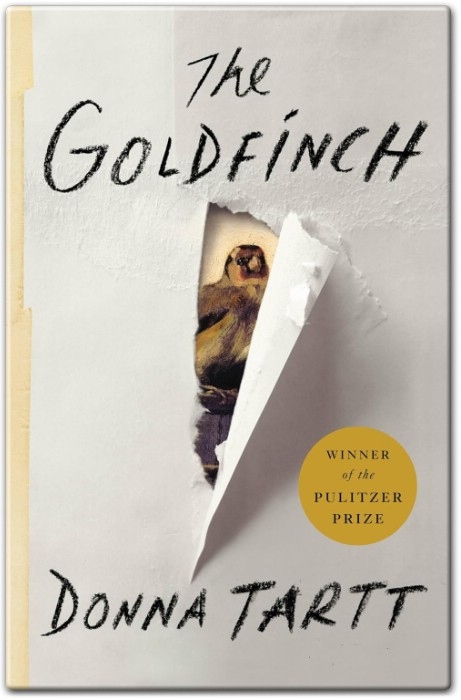
Imagine walking into a museum with your mother on a rainy New York morning. A moment later, everything shatters. A bomb explodes, and you’re left in the rubble—alone, traumatized, and unknowingly in possession of a priceless painting. That’s the devastating and unforgettable launch of The Goldfinch, Donna Tartt’s Pulitzer Prize-winning novel that chronicles the life of Theo Decker, a boy who loses everything and is left clinging to a single work of art: Carel Fabritius’s The Goldfinch.
This The Goldfinch summary takes you deep into the emotional core of a novel that explores grief, addiction, love, and the redemptive power of art. Over nearly 800 pages, Tartt crafts a richly layered coming-of-age saga that examines how one tragic moment can spiral into decades of consequence.
The Goldfinch Summary: At a Glance
- Main Plot: Theo Decker survives a terrorist attack that kills his mother. In the chaos, he takes a valuable painting. This choice shapes his life across New York, Las Vegas, and Amsterdam.
- Key Themes: Enduring grief, the burdens of beauty, fate vs. free will, deception, identity, and the redemptive power of chosen family.
- Narrative Style: Lyrical, immersive first-person narration with philosophical and psychological depth.
- Ideal For: Fans of literary fiction, dark coming-of-age tales, and intricate character studies.
Plot Summary: From Trauma to Transformation
Theo Decker is a 13-year-old boy visiting the Metropolitan Museum of Art with his beloved mother when a terrorist bomb tears through the building. His mother dies. In the confusion, a dying elderly man, Welty, entrusts Theo with a ring and encourages him to take The Goldfinch, a small but priceless painting.
Shocked and grief-stricken, Theo hides the painting and wanders through a world suddenly void of structure. He stays briefly with the wealthy Barbours, a distant schoolmate’s family, before being whisked away to Las Vegas by his negligent, gambling-addicted father.
In Vegas, Theo meets Boris, a fiercely loyal, streetwise boy who introduces him to a world of drugs, alcohol, and philosophical conversations about morality and fate. After his father dies suddenly, Theo flees back to New York and seeks out Hobie, the antique restorer connected to Welty and the ring.
Under Hobie’s guidance, Theo finds refuge and purpose. But he also descends into a double life—helping Hobie restore antiques while secretly selling forged items to finance his drug use. His guilt over the stolen painting festers, especially as he reconnects with the Barbours and becomes engaged to Kitsey Barbour, despite still being emotionally tied to Pippa, the girl he saw in the museum just before the bombing.
Then, Boris returns as an adult and drops a bombshell: The Goldfinch was stolen from Theo during his Vegas days. Boris has spent years tracking it, and now they must retrieve it from the criminal underworld of Amsterdam. The resulting operation forces Theo to confront every lie, secret, and regret that has haunted his life.
Thematic Deep Dive: What The Goldfinch Really Means
1. Grief as a Shaping Force
Theo’s entire life is defined by the loss of his mother. Tartt refuses to portray grief as something one simply “moves past.” Instead, it becomes a permanent lens through which Theo views the world. His substance abuse, emotional detachment, and moral ambiguity are all symptoms of unresolved trauma.
2. The Beauty and Burden of Art
The painting of the chained goldfinch is both lifeline and prison. It represents the final tether to his mother and a tangible embodiment of transcendent beauty. Yet, it also shackles Theo in guilt and criminality. Tartt suggests that art, like love, is capable of healing and destruction in equal measure.
3. Fate, Chaos, and Moral Ambiguity
Is Theo’s life shaped by destiny or by random misfortune? The bombing is an act of random chaos, but its aftermath unfolds with uncanny narrative symmetry. Boris frequently muses that life isn’t fair, and good doesn’t always follow from good actions. This philosophical underpinning gives the story its existential weight.
4. Identity and Self-Deception
Theo is a master of wearing masks. Whether he’s pretending to be a dutiful heir to the Barbours or a legitimate antiques dealer, he’s always performing. His fear of being found out—as a fraud, a thief, an addict—drives much of the novel’s tension.
5. Found Family vs. Blood Ties
Theo’s biological father is a source of betrayal and neglect. True love and support come from people he chooses—Hobie, Boris, even the memory of Pippa. Tartt shows that home is not a place or a bloodline, but a bond forged through shared truth and enduring care.
Major Characters: Who’s Who in The Goldfinch
- Theo Decker: The protagonist. Intelligent but broken, struggling with grief, addiction, and identity.
- Boris: Theo’s chaotic best friend, philosophical and impulsive, whose loyalty is both redemptive and dangerous.
- Hobie: The gentle antique restorer who becomes a father figure. Symbolizes integrity, kindness, and tradition.
- Pippa: Theo’s unattainable ideal and fellow survivor. Represents innocence and the lingering past.
- Kitsey Barbour: Theo’s fiancée. Polished and proper, yet their engagement feels hollow.
- Audrey Decker: Theo’s mother, whose death defines his life. An off-page presence that fuels the novel’s emotional heart.
- Larry Decker: Theo’s father. His reappearance leads to Theo’s downward spiral in Vegas.
Writing Style & Pacing
Donna Tartt’s prose is densely packed, rich in detail, and stylistically sophisticated. Her sentences often sprawl, pulling readers deep into Theo’s psyche. This style divides readers: some find it immersive and poetic; others may see it as slow.
The narrative opens with gripping intensity. The middle section, set in Las Vegas, slows the pace but offers essential psychological development. The final third returns to a more suspenseful rhythm as Theo and Boris plunge into a high-stakes international mission to recover the painting.
The ending is less about plot closure and more about philosophical reflection, leaving readers with powerful questions about morality, meaning, and the legacy of beauty.
Frequently Asked Questions (FAQ)
Q: Is The Goldfinch based on real events?
No, but the painting at the story’s center, The Goldfinch by Carel Fabritius, is real and resides in the Mauritshuis museum in The Hague.
Q: Does the novel have LGBTQ+ themes?
While the bond between Theo and Boris is intense, it isn’t framed explicitly as romantic. The novel focuses more on emotional and philosophical connections than sexual identity.
Q: Is the book slow?
It can be. Especially the Vegas section. But readers who appreciate character depth and thematic richness tend to find the pacing worthwhile.
Q: What is the message of The Goldfinch?
Life is fragile and often chaotic, but beauty endures. Art offers both escape and redemption, though not without cost.
Final Thoughts: Why The Goldfinch Matters
The Goldfinch isn’t a book you breeze through. It asks for your time, attention, and emotional investment. But in return, it offers one of the most profound meditations on grief, beauty, and the search for meaning in modern fiction.
Through Theo’s broken lens, we see how trauma can distort a life—but also how love, art, and connection can offer salvation. Donna Tartt masterfully blends suspense, psychological insight, and literary elegance into a novel that is as emotionally harrowing as it is intellectually rewarding.
If you’re looking for a story that lingers, challenges, and ultimately transforms, The Goldfinch delivers.
Rating: 4.5/5 Stars
A masterful modern classic with thematic heft and unforgettable characters.