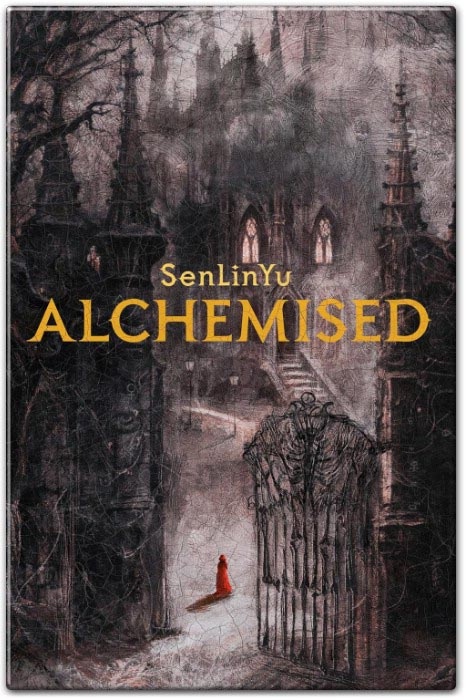
Introduction To Alchemised Book Summary and Review
Does the trauma of war ever truly end, or do we simply learn to shapeshift around the scars?
I stumbled upon Alchemised after hearing a deafening amount of buzz in the fantasy community. I am usually skeptical of hype, having been burned by “TikTok sensations” before, but the premise of a healer stripping her own mind to survive a dystopian regime intrigued me. I expected a standard dark romance. What I found instead was a psychological thriller wrapped in the guise of fantasy—a story so visceral that I often had to pause just to breathe.
This isn’t a bedtime story. It is a dissection of grief, complicity, and the terrifying resilience of the human spirit.
In this ‘Alchemised’ Summary, I won’t just recap the plot. I want to walk you through the labyrinth of Helena’s fractured memory, analyze the alchemy of Kaine’s redemption, and explore why this book is being hailed as a modern classic. Whether you are a lover of dark academia, high-stakes political fantasy, or enemies-to-lovers tropes that actually hurt, this breakdown is for you.
Warning: We are about to wade into deep waters. If you love stories that challenge your moral compass, keep reading.
If you enjoy deep-dive literary analysis that respects your intelligence, consider subscribing to our newsletter for weekly breakdowns of the hottest fantasy releases.
TL;DR Section: The Quick Scoop
For the readers who are short on time but hungry for the details:
The ‘Alchemised’ Snapshot
-
One-Sentence Core Idea: A traumatized healer with locked memories is gifted to the enemy’s deadliest enforcer, forcing them into a high-stakes psychological chess match that turns into a devastating romance.
-
⚡ Key Insights:
-
Survival is Ugly: The book rejects the “pretty” heroine trope; survival here requires degradation and moral compromise.
-
Memory is Identity: The central magic system treats memory as a physical resource that can be stolen, stored, or weaponized.
-
The Villain Narrative: It challenges the idea of the irredeemable monster, showing how war machines are made, not born.
-
-
Themes: Post-traumatic stress, the morality of war, memory vs. truth, redemption, and the cyclical nature of power.
-
Target Audience: Fans of The Poppy War or The Handmaid’s Tale who want a heavy dose of romance. Strictly for adult readers comfortable with dark themes (torture, non-con/dub-con elements, psychological abuse).
-
Comparison: Think the political bleakness of 1984 meets the magical intensity of A Court of Thorns and Roses, but significantly darker.
-
Main Conflict: Helena must protect the secret in her head while Kaine tries to extract it—all while they fight an undeniable, unwanted connection.
-
Tone/Style: Gothic, claustrophobic, clinical yet lyrical, and intensely emotional.
-
✅ Pros: Masterful character psychology, unique “alchemy” magic system, earned emotional payoff.
-
❌ Cons: Pacing can be slow in the middle; the darkness is relentless and may trigger some readers.
-
My Rating: ⭐⭐⭐⭐⭐ (4.8/5) – An absolute gut-punch of a novel.
Book Details & Data
-
Publisher: Del Rey
-
Publication Date: September 23, 2025
-
Edition: Deluxe Edition
-
Language: English
-
Print Length: 1,040 pages
-
ISBN-10: 0593972708
-
ISBN-13: 978-0593972700
-
Series: Standalone (currently)
-
Genres: Dark Fantasy, Dystopian Fiction, Romance
-
Sub-genres: Gothic Fantasy, War Fiction
(Note: Rankings and reviews may change over time on Amazon and other retailers.)
Profound Questions ‘Alchemised’ Answers
Here are 10 critical questions this narrative explores, offering a glimpse into its depth without ruining the experience:
-
Can a person love their abuser? The book explores trauma bonding and how shared suffering can morph into a complex, genuine connection that defies simple labels.
-
What is the true cost of winning a war? It answers this by showing that the “winners” (The Guilds) are just as broken and paranoid as the losers.
-
Is memory necessary for love? The story posits that while the mind can forget, the body and soul possess a “muscle memory” of attachment that cannot be erased.
-
Does the end justify the means? Through the character of the High Reeve, the book argues that sometimes you must become a monster to kill one.
-
How do regimes maintain control? By controlling history and memory—literally extracting the truth from the populace so dissent becomes impossible.
-
What is “Alchemised” referring to? It refers to the metaphorical transmutation of the soul through pain; turning leaden trauma into golden resilience.
-
Can you save everyone? The hard answer provided is no; sometimes leadership means choosing who dies so that others may live.
-
Is redemption earned or given? It suggests redemption is an active, painful clawing back of one’s humanity, not a passive forgiveness.
-
What role does silence play in survival? For Helena, silence is a fortress; the book answers that speaking out is a luxury of the free.
-
Are heroes and villains born? No, the book meticulously deconstructs how circumstances, upbringing, and choices manufacture them.
‘Alchemised’ Summary: The Plot Breakdown
The One-Paragraph Summary
Helena Marino, a healer for the defeated Resistance, wakes up in a stasis tank with no memory of the last 14 months. The war is lost, and the tyrannical Guilds and their undead masters rule Paladia.
Helena is given to the High Reeve, Kaine Ferron—the regime’s most terrifying enforcer and her former academic rival. Kaine’s mission is to use forbidden magic to extract a secret locked in Helena’s mind, but as he delves into her psyche, they uncover a shared past that changes the nature of their relationship and the fate of the war itself.
Read Also:
General Summary: What is ‘Alchemised’ About?
(Spoiler Warning: This section contains mild spoilers for the premise and setup.)
The story begins in absolute isolation. Helena Marino has been kept in a sensory deprivation tank, kept alive only for her magical utility. When she is dragged out, she finds a world turned to ash. The Resistance, the “Order,” has been obliterated. The Guilds now rule with an iron fist, aided by the “Undying”—necromancers who have cheated death.
Helena is a “Vivimancer,” a rare healer. But she is also a puzzle. Her mind has been professionally wiped, hiding a secret that the High Necromancer, Morrough, is desperate to find. Because standard torture fails to break her mental blocks, she is assigned to the High Reeve, Kaine Ferron.
Kaine is a nightmare figure—masked, cold, and lethal. He takes Helena to his crumbling estate, Spirefell. Here, the story shifts from a war epic to a gothic psychological thriller. Kaine uses “Animancy”—mind magic—to sift through her memories. It is invasive and violating. Yet, in the quiet moments between torture and training, a strange dynamic emerges. Kaine is protecting her. He is training her. And he seems to know her better than she knows herself.
As Helena navigates the terrifying politics of the new world and the confusing landscape of her own mind, she realizes that the High Reeve might not be the loyal dog of the empire he appears to be. He might be the only other person in the world who wants the regime to burn as much as she does.
‘Alchemised’ Summary Chapter-by-Chapter
(Spoiler Warning: Detailed plot points ahead.)
Chapters 1–10: The Awakening & The Estate
Helena is pulled from stasis. Disoriented and atrophied, she learns the war is lost. She is processed like livestock and eventually transferred to Spirefell. We meet Kaine Ferron, the High Reeve. The atmosphere is terrified compliance. The first “sessions” of memory extraction occur; they are brutal, leaving Helena physically ill.
Chapters 11–20: The Training
Kaine begins to train Helena physically. It seems cruel at first, forcing a weakened prisoner to run and fight, but Helena realizes he is rebuilding her strength. She meets the household staff, who are terrified of Kaine but strangely loyal. We see glimpses of Kaine’s exhaustion and the physical toll his dark magic takes on him.
Chapters 21–30: The Shift
The dynamic changes. Forced proximity leads to tension—not just fear, but recognition. Helena starts to recover fragmented memories of the war. She recalls moments where the High Reeve spared her or the Resistance. She realizes his cruelty is a performance for the surveillance eyes of the High Necromancer.
Chapters 31–40: The Flashbacks
The narrative dives deep into the past. We see the war through Helena’s recovered memories. We learn how she and Kaine formed a secret alliance years ago. He was a spy; she was his handler. The romance in the past timeline is a slow, agonizing burn of forbidden love amidst bloodshed.
Chapters 41–50: The Revelation
Back in the present, the truth of Helena’s memory wipe is revealed. She did it. She wiped her own mind to protect Kaine’s identity as a spy. The emotional weight of this—that she sacrificed her identity to save him—shatters the remaining walls between them.
Chapters 51–60: The Insurrection
Kaine and Helena stop pretending. They plot a final strike against Morrough and the Undying. The pacing accelerates. The intricate political maneuvering explodes into violence. They use the very alchemy and necromancy the regime cherishes to destroy it from the inside.
Chapters 61–77: The Aftermath
The final battle is costly. It’s not a clean victory. The regime falls, but the scars remain. The ending focuses on the difficulty of rebuilding a life after trauma. Helena and Kaine survive, but they are “alchemised”—changed forever, finding peace in a quiet life away from the power they toppled.
‘Alchemised’ Book Analysis
Character Analysis
| Character | Role | Development Arc |
| Helena Marino | Protagonist | Starts as a disassociated victim in a tank. Through memory recovery, she reclaims her agency, realizing she was never a damsel but the architect of the resistance’s greatest secrets. |
| Kaine Ferron | Antagonist/Hero | The classic Byronic hero. He begins as a monster, the “High Reeve.” We peel back layers to find a man who sacrificed his soul to save the woman he loved. His arc is about redemption through action, not words. |
| Morrough | Main Villain | Represents absolute corruption. He is the foil to Kaine—where Kaine uses dark magic for love, Morrough uses it for domination. He is the stagnation of death. |
| Lila Bayard | Supporting | A tragic figure representing the horrors of war. Her transformation into a thrall serves as the emotional catalyst for Helena’s rage. |
Themes & Analysis
-
The Alchemy of Trauma: The title is the core metaphor. In alchemy, you break a substance down to rebuild it into something higher (gold). In this book, the characters are broken down by war and torture, only to rebuild themselves into harder, more resilient versions.
-
Complicity vs. Survival: The book asks difficult questions about what people do to survive. Is Kaine a villain for killing innocents to maintain his cover? The book refuses to give a binary answer.
-
Memory as Truth: The narrative structure relies on the idea that we are nothing without our memories. Helena is a ghost until she remembers who she loved and who she fought.
Symbolism
-
The Eyes: The regime uses magical surveillance eyes. They symbolize the loss of privacy and the constant performance required to survive in a dictatorship.
-
The Stasis Tank: Represents the womb and the tomb—Helena’s rebirth into a nightmare.
-
Cold Iron: Used to bind magic users, symbolizing the oppressive weight of the industrial/military complex over the natural/magical world.
Genre & Setting
-
Setting: Paladia (A dystopian, magical city-state).
-
Genre: Dark Fantasy / Grimdark.
-
Sub-genre: Dystopian Romance.
My Personal In-Depth Literary Review
“I am tired of stories where love conquers all without getting its hands dirty.”
As a senior reviewer, I read hundreds of fantasy novels a year. Most blur together. Alchemised stands apart because it refuses to be polite.
What draws you in is the claustrophobia. SenLinYu writes the interiority of the mind better than almost anyone in the genre. When Helena is in the tank, you are in the tank. The prose is sparse, almost clinical, which makes the moments of emotional eruption hit with the force of a bomb.
Why it works:
-
The Slow Burn: This is a masterclass in pacing. Kaine and Helena don’t touch for hundreds of pages, yet the tension is suffocating. It validates the “Enemies to Lovers” trope by actually making them enemies first.
-
The Stakes: In many fantasy books, the stakes feel abstract. Here, the threat of sexual violence, torture, and permanent death feels terrifyingly real. It grounded the magic in a gritty reality that reminded me of The Handmaid’s Tale.
Critique:
If I must be critical, the middle section—where the domestic routine at Spirefell is established—can feel repetitive. However, I argue this is intentional. It mimics the monotony of captivity.
Comparisons:
If you liked these, you will devour Alchemised:
-
The Poppy War (for the brutality of war).
-
The Handmaid’s Tale (for the oppression of women).
-
Nineteen Eighty-Four (for the surveillance state).
-
A Court of Thorns and Roses (for the High Lord dynamic, but darker).
-
Fourth Wing (for the war college flashbacks).
-
Severance (for the isolation).
-
Uprooted (for the corrupting magic).
-
Vicious by V.E. Schwab (for the moral greyness).
-
Jane Eyre (for the gothic estate and brooding master).
-
Never Let Me Go (for the inevitable tragedy).
My Final Rating: ⭐⭐⭐⭐⭐ (4.8/5) – A haunting, vital addition to the canon of dark fantasy.
About the Author
SenLinYu is a literary phenomenon who proves that the boundaries between traditional publishing and online storytelling are dissolving. Based in the Pacific Northwest, she possesses a background in classical liberal arts that clearly informs the philosophical depth of her writing.
What makes her story unique is her origin. She began writing on her phone—literally typing out masterpieces in the Notes app during the stolen moments of motherhood. She built a massive, devoted global following online before Alchemised (originally the fanfiction magnum opus Manacled) was acquired by Del Rey. She is known for her meticulous plotting and her ability to write tragedy that feels cathartic rather than gratuitous.
Quotes Section
Here are the 15 most profound quotes from Alchemised that captured the essence of the book:
-
“I think I’ve nearly memorised you. Especially your eyes. I think I learned to read them first.”
-
“You are not replaceable. You are not required to make your death convenient.”
-
“Love isn’t as pretty or pure as people like to think. There’s a darkness in it sometimes.”
-
“We have to stop hurting ourselves for each other. Both of us.”
-
“I am chained to a sinking ship. I will not take you with me.”
-
“You’re like a rose in a graveyard.”
-
“All there is now is surviving. That’s all that matters.”
-
“If you are waiting for a hero, you will wait forever. Be the knife.”
-
“Memory is a mercy, but forgetting is a shield.”
-
“I did not keep you to torture you. I kept you to remember who I was.”
-
“The world does not end with a bang, but with a signature on a treaty.”
-
“Your silence is the loudest thing in this room.”
-
“I would burn this world to ash if it meant you could stand in the sun.”
-
“We are the sum of what we have lost.”
-
“Do not mistake my necessity for cruelty.”
Frequently Asked Questions (FAQ)
What is ‘Alchemised’ about?
Alchemised is a dark fantasy romance about Helena, a healer in a defeated resistance, who is captured and given to the High Reeve, a deadly enforcer. She must navigate a toxic relationship and a dystopian regime while unlocking suppressed memories that could change the war’s outcome.
What is the ‘Alchemised’ synopsis?
Set in a post-war dystopia, the synopsis follows Helena Marino’s transition from a prisoner of war to a key political player. After waking with amnesia, she is forced to work with her enemy, Kaine Ferron, to retrieve memories that explain the fall of the Resistance and the rise of the undead regime.
Who are the main characters in ‘Alchemised’?
The protagonists are Helena Marino, a skilled Vivimancer (healer) and spy, and Kaine Ferron, the High Reeve of the Guilds. Key antagonists include the High Necromancer Morrough and various Guild leaders.
What is the main theme of ‘Alchemised’?
The primary theme is the trauma of war and the complexity of redemption. It explores how individuals survive under fascism and the moral compromises required to protect the ones they love.
What genre is ‘Alchemised’ and what makes it stand out?
It is Dark Fantasy with heavy elements of Dystopian Romance. It stands out due to its “Animancy” magic system, its unflinching portrayal of PTSD, and its origin as a globally viral story before traditional publication.
Is ‘Alchemised’ part of a series or a standalone story?
Currently, Alchemised is published as a massive standalone novel (often split into volumes in some editions due to length), but the story is self-contained with a definitive beginning and end.
Are there trigger warnings for ‘Alchemised’?
Yes. The book contains dark themes including rape/non-consensual situations (alluded to or part of the backstory/threat), torture, psychological abuse, gore, character death, and severe PTSD. Reader discretion is advised.
Is ‘Alchemised’ the same as ‘Manacled’?
Alchemised is the traditionally published, reworked version of the viral fanfiction Manacled. While the core emotional beats and character dynamics remain, names, world-building, and specific plot elements have been changed to create an original IP.
Conclusion
Alchemised is a testament to the power of storytelling. It reminds us that even in the darkest dungeons—literal or metaphorical—connection is possible.
Key Takeaways:
-
Trauma shapes us, but doesn’t have to define us.
-
Love in a war zone is an act of rebellion.
-
SenLinYu is a literary force to be reckoned with.
If you are brave enough to let a book break your heart, pick this one up. You won’t be the same when you put it down.
Ready to dive deeper into the world of dark fantasy?
[Subscribe to our newsletter] for exclusive author interviews, detailed lore breakdowns, and more unfiltered reviews. Don’t read alone—join the conversation.