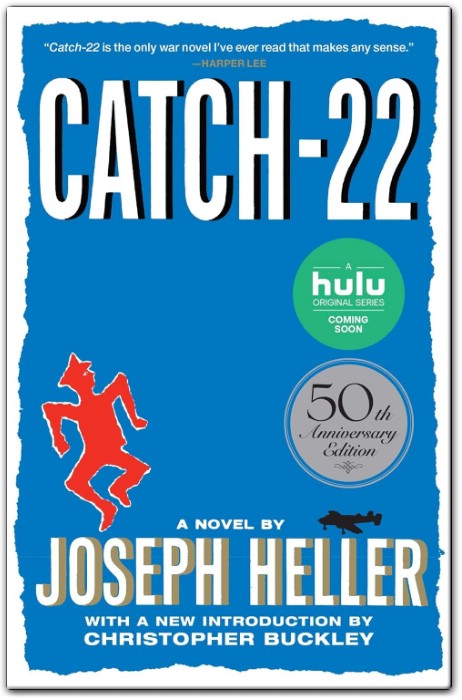
Joseph Heller’s groundbreaking novel, Catch-22, remains a towering achievement in 20th-century literature—one that masterfully satirizes the madness of war and the dehumanizing machinery of bureaucracy. First published in 1961, Catch-22 is not just a book; it’s a cultural lexicon, with the term “Catch-22” entering everyday language to signify a no-win situation. In this Catch-22 summary, we delve into its plot, characters, themes, and enduring relevance, unpacking why this chaotic, darkly comic novel continues to captivate and unsettle readers more than six decades later.
What Is Catch-22 Really About?
At its core, Catch-22 is an anti-war novel cloaked in absurdity. The story revolves around Captain John Yossarian, a U.S. Army Air Forces bombardier stationed on the fictional island of Pianosa during World War II. Yossarian’s central objective isn’t to win the war—it’s simply to stay alive. But survival in Heller’s warped military world proves nearly impossible thanks to a maddening bureaucratic paradox: Catch-22.
This legendary rule states that a pilot can be grounded if he’s insane—but if he requests to be grounded to avoid dangerous missions, he’s clearly sane and therefore must continue flying. It’s a circular logic trap that epitomizes the novel’s central tension: individuals versus institutional power.
Plot Breakdown (Spoiler-Free Overview)
Yossarian begins the novel in the base hospital, faking illness to avoid flying combat missions. The number of required missions keeps rising at the whim of his superiors—particularly Colonel Cathcart, whose obsession with glory repeatedly endangers his men. Yossarian’s efforts to escape his duties—whether by malingering, manipulating doctors, or even going AWOL—are constantly thwarted by the impenetrable logic of Catch-22.
The novel unfolds through a non-linear structure, using fragmented timelines and recurring events to reflect the confusion and chaos of war. Heller’s cast of absurd and grotesque characters—Major Major Major Major, Milo Minderbinder, General Scheisskopf, Doc Daneeka, and many others—contribute to a kaleidoscope of contradictions, where patriotism becomes profit, sanity is punished, and logic is weaponized.
Major Characters in Catch-22
- Captain John Yossarian – The disillusioned protagonist, desperate to escape the war’s insanity.
- Milo Minderbinder – A mess officer turned capitalist tycoon, who puts profits above people—even bombing his own squadron for a good deal.
- Colonel Cathcart – The self-serving leader who continually raises mission quotas to climb the military ladder.
- Doc Daneeka – A cynical flight surgeon who reinforces the system rather than challenge it.
- Nately – A naive young soldier in love with a prostitute, representing lost innocence.
- Aarfy – Yossarian’s navigator, whose sociopathic behavior reveals the depths of moral decay.
Key Themes in Catch-22
1. The Absurdity of War
Heller doesn’t just critique war’s brutality—he targets its logic. Missions are extended arbitrarily, soldiers die senselessly, and those in power remain untouched. War becomes not a noble cause but a farce orchestrated by incompetence and greed.
2. Bureaucratic Insanity
The military hierarchy in Catch-22 isn’t just inefficient—it’s irrational to the point of being dangerous. Characters like Colonel Cathcart and General Peckem enforce rules that serve ego and politics, not safety or justice.
3. Sanity vs. Insanity
Yossarian’s insistence on staying alive makes him the sanest man in the book—yet the military treats his refusal to die as madness. This inversion illustrates the novel’s exploration of how systems redefine logic to control behavior.
4. Dehumanization and Moral Decay
From mass bombings to rape and murder, Heller exposes how war erodes humanity. Characters lose their empathy and moral compass, often in grotesque and shocking ways.
5. Free Will and Resistance
Yossarian’s journey is ultimately about reclaiming agency. When faced with the choice between complicity and rebellion, he chooses a path that affirms life—even if it defies everything the military demands.
Spoiler Section: The Turning Point
As the novel progresses, the absurdities accumulate until they can no longer be dismissed as dark humor. The death of Snowden, a young gunner whose entrails spill out in Yossarian’s arms, becomes a symbolic breaking point. This trauma crystallizes Yossarian’s realization: war is not only absurd—it is monstrously indifferent to life.
When offered a deal to return home in exchange for endorsing the very system he loathes, Yossarian refuses. Instead, he resolves to escape—following the lead of his friend Orr, who successfully fled to Sweden. His decision marks a moral victory, choosing conscience over survival under false terms.
Chapter Highlights (Condensed)
- The Texan: Introduces Yossarian faking illness; satirizes patriotic posturing.
- Havermeyer: A reckless yet praised bombardier—valor meets lunacy.
- Captain Black: Loyalty Oath Crusade parodies blind nationalism.
- Major de Coverley: Silent authority figure who achieves more with less.
- Luciana: A fleeting love interest who symbolizes missed human connection.
- Aarfy: Commits a brutal crime without consequences—morality collapses.
- Snowden: His death shatters Yossarian and drives the novel’s climax.
- Catch-22 (Chapter 40): Reveals the cruel genius of the paradox in full force.
- Final Escape: Yossarian rejects complicity and heads toward uncertain freedom.
Why Catch-22 Still Resonates Today
This Catch-22 summary underscores the novel’s enduring power as a work of political, philosophical, and literary brilliance. In an age where bureaucracy continues to baffle, where institutions often prioritize rules over people, and where war remains a profitable business, Heller’s satire feels uncannily relevant.
The genius of Catch-22 lies in its refusal to offer easy answers. It presents a world where survival depends on navigating insanity—but also insists that resisting that insanity is a form of sanity in itself. Readers are left with a final message: even in a senseless world, we still have choices.
Final Thoughts
If you’re a fan of literary fiction, dark humor, or stories that challenge the very structure of power and logic, Catch-22 is an essential read. This Catch-22 summary aims to reflect the depth and complexity of Joseph Heller’s novel without spoiling its nuanced satire. Whether you’re reading it for the first time or revisiting it, this is one novel that will leave you questioning everything—and laughing in disbelief.