Introduction: Why Creation Lake Haunted Me
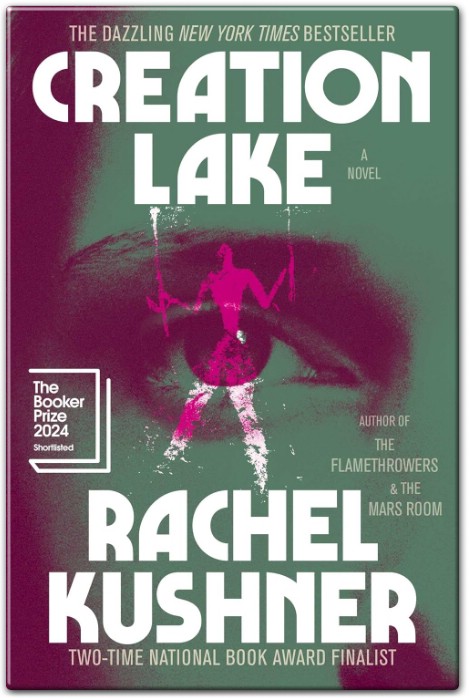
Spy novels usually promise tension, suspense, and adrenaline-pumping twists—but Rachel Kushner’s Creation Lake is different. Far from a conventional thriller, it’s a cerebral, haunting journey that challenges our understanding of humanity, history, and morality.
When I first opened this book, I expected a taut story of espionage. What I found instead was a labyrinthine exploration of philosophy, environmental activism, and the raw, sometimes terrifying, complexities of human nature. Kushner’s prose is sharp, immersive, and unrelenting; her unnamed protagonist—a female operative with lethal skill—serves as both guide and enigma in a narrative that refuses to simplify its themes.
This Creation Lake summary will break down why this novel resonates, what makes it exceptional, and why it lingers in your mind long after the last page.
TL;DR: Key Takeaways
- Genre-Bending Storytelling: A spy thriller meets philosophical inquiry meets eco-fiction.
- The Protagonist: A morally ambiguous female operative who’s brilliant, ruthless, and impossible to ignore.
- Big Ideas: Neanderthals as noble visionaries, capitalism as humanity’s “death drive,” and the costs of progress.
- Pacing: A slow-burn tension that detonates into unpredictable chaos.
- Rating: ★★★★☆ (4.5/5). Demanding but intellectually and emotionally rewarding.
- Recommended For: Readers who enjoy Don DeLillo’s intellectual thrillers or Jeff VanderMeer’s eco-dystopian narratives.
Pros: Innovative prose, unforgettable characters, and bold philosophical themes.
Cons: Dense digressions into philosophy may challenge some readers; the tone is dark and contemplative.
Readers’ Reactions: Real Opinions
The buzz around Creation Lake reflects its intellectual and emotional weight:
- “Kushner’s spy is terrifyingly amoral… I couldn’t stop reading even as I recoiled.”
- “Bruno’s Neanderthal theories blew my mind. Never seen history used like this in fiction.”
- “Slow burn that explodes. The farm fair scene? Unforgettable chaos.”
- “Not for the faint of heart. Dark, philosophical, and utterly unique.”
- “The ending left me breathless. What does ‘solitude’ really cost?”
- “Kushner’s best since The Mars Room. A masterpiece of tension and ideas.”
- “If you like your thrillers brainy and bleak, this is your next obsession.”
Clearly, this book isn’t just a story—it’s an experience that challenges readers to confront unsettling questions about history, morality, and our place in the natural world.
General Overview: What Is Creation Lake About?
At its heart, Creation Lake follows an unnamed female operative—let’s call her Sadie Smith—who infiltrates a rural French eco-anarchist commune called Le Moulin. The commune, led by the magnetic Pascal Balmy, is actively sabotaging industrial megaprojects that drain the land’s natural resources. Sadie’s cover: dating Lucien, Pascal’s naïve childhood friend and aspiring filmmaker.
Her mission, however, is far more complex than espionage. Sadie also intercepts emails from Bruno Lacombe, a reclusive philosopher who lives in a cave and sends radical reflections on Neanderthals and humanity’s self-destructive tendencies. Bruno’s visions—painting Neanderthals as noble dreamers crushed by the relentless “death drive” of Homo sapiens—are intellectually electrifying and emotionally unsettling.
The plot escalates as Sadie manipulates individuals to carry out a politically charged assassination during a local farm fair. The outcome, a chaotic and almost accidental resolution, underscores Kushner’s recurring theme: the lawlessness and unpredictability of human life.
Core Themes Explored
Creation Lake is not just a spy thriller—it’s a meditation on humanity, morality, and the precariousness of civilization. Key themes include:
| Theme | How It Appears | Reflection |
|---|---|---|
| Truth vs. Illusion | Sadie’s lies, Bruno’s “cave frequencies” | Are we all performing roles? How much of reality is filtered through personal perception? |
| Humanity’s Wrong Turn | Bruno’s Neanderthals vs. Sapiens | Our species’ greed and self-interest may have derailed a nobler path. Climate crisis undertones are vivid. |
| Resistance & Futility | Le Moulin’s infighting and failed idealism | Activism is messy, exhausting, and sometimes doomed—yet meaningful. |
| The “Inner Salt” | Sadie’s philosophy of randomness | Life is chaotic; morality is ambiguous. Sadie’s cold logic provides her protection and clarity. |
These themes are not merely decorative—they drive the narrative and linger in the reader’s consciousness long after the plot concludes.
Characters: Who Shapes Creation Lake?
Rachel Kushner’s characters are multifaceted, flawed, and unforgettable. They are as essential to the narrative as the plot itself.
| Character | Role | Arc / Impact | Impression |
|---|---|---|---|
| Sadie (The Narrator) | Protagonist / Spy | Master manipulator who abandons her life for isolation | Ruthless, intelligent, morally complex—captivating and disturbing. |
| Bruno Lacombe | Philosopher Mentor | Cave-dwelling radical thinker on Neanderthals | Heartbreaking genius; his ideas haunt the narrative. |
| Pascal Balmy | Commune Leader | Charismatic, enigmatic, inspiring loyalty and resentment | Revolutionary charisma with human flaws; magnetic presence. |
| Lucien Dubois | Sadie’s “Boyfriend” | Provides cover and access | Naïve, innocent, tragically unaware; evokes empathy. |
| Burdmoore | Exiled American | Violent past; manipulated into chaos | Humanized brutality; embodies moral ambiguity. |
Every character operates in shades of gray, reflecting Kushner’s nuanced perspective on human nature.
Symbolism: The Layers Beneath the Surface
Kushner’s prose brims with metaphor and layered meaning. Some key symbols include:
| Symbol | Meaning | Example |
|---|---|---|
| Caves | Hidden truths, refuge from modernity | Bruno’s cave sanctuary, source of radical “frequencies” |
| Fire | Human ingenuity vs. destruction | Bruno’s warning: “Only a fool makes a large fire.” |
| Genetic Lice | Ancestral trauma / inherited knowledge | Bruno’s metaphorical tool for history’s invisible weight |
| Salt | Immutable chaos of life | Sadie’s guiding philosophy: randomness rules |
| “Les Babies” Stickers | Lost innocence, sterile modernity | Vandalizing Lucien’s home; commentary on society |
These symbols enhance the narrative, embedding philosophical and ecological reflections seamlessly into the espionage plot.
Memorable Quotes
Kushner’s writing is both cerebral and visceral, producing lines that stay with the reader:
- “Charisma doesn’t originate in the ‘charismatic.’ It comes from the need of others to believe special people exist.”
- “A man whose death drive is in the driver’s seat.”
- “Stealing refocuses the mind. It stops time.”
- “We live not in this day and age, but against it.”
- “Truth isn’t politics. It’s a hard, white salt under the noise.”
- “Only a fool makes a large fire.”
Each quote captures the philosophical weight and narrative tension, emphasizing Kushner’s genius for embedding big ideas into a gripping story.
About the Author: Rachel Kushner
Rachel Kushner is a two-time National Book Award finalist, acclaimed for The Flamethrowers and The Mars Room. She brings:
- Intellectual rigor: Dense philosophical and historical reflections woven into narrative tension.
- Cynical lyricism: The narrator is cold and precise, yet Kushner’s prose remains beautifully evocative.
- Fearless thematic exploration: Capitalism, ecological disaster, and human morality—all examined without sugarcoating.
Her meticulous research and immersive storytelling make the reader feel the damp stone walls, the chaotic protests, and the isolation of deep caves.
FAQ: Quick Answers About Creation Lake
Q1: What is Creation Lake about?
A: A morally ambiguous female spy infiltrates a French eco-anarchist commune while grappling with a reclusive philosopher’s radical Neanderthal theories. Espionage meets existential philosophy.
Q2: Is it worth reading?
A: Absolutely. It’s a cerebral, morally complex thriller. Not a light read, but profoundly rewarding.
Q3: Rachel Kushner’s best book?
A: Subjective, but The Mars Room is often hailed as her masterpiece. Creation Lake is darker, more philosophical, and equally daring.
Q4: How many pages?
A: 384 pages. Dense, immersive, and purposeful.
Q5: Who is the protagonist?
A: The unnamed operative, alias Sadie Smith, is brilliant, amoral, and chillingly observant.
Q6: Main conflict?
A: Externally: spy vs. anarchists vs. the state. Internally: humanity’s destructive tendencies vs. hope for change.
A: Yes, though morally and existentially ambiguous. The protagonist survives and escapes, but the philosophical weight lingers.
Conclusion: Should You Read Creation Lake?
Creation Lake isn’t comfortable. It challenges assumptions about history, progress, and morality. Its protagonist’s cold logic and Bruno’s radical philosophies haunt the reader long after the final page.
For thrill-seekers who crave intellectual stimulation, morally complex characters, and a narrative that refuses to offer easy answers, this book is an absolute must-read.
If you’re ready to confront your own “inner salt” and explore the chaotic depths of human nature, Creation Lake awaits.
Find your copy at your local bookstore and dive into a literary thriller that challenges the mind and shakes the soul.