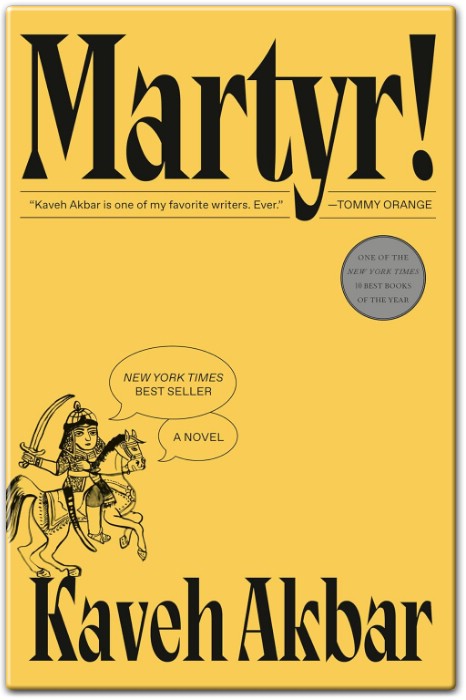
Martyr! by Kaveh Akbar is a powerful debut novel that masterfully blends poetic prose with a deeply human story of addiction, identity, and the quest for purpose. Known primarily for his evocative poetry, Akbar brings the same lyrical intensity to this narrative, introducing readers to Cyrus Shams — a recovering addict and aspiring poet wrestling with personal loss and cultural displacement. This Martyr! book summary will dive into the novel’s key themes, plot highlights, literary significance, and why this work has captured the attention of readers and critics alike.
Introduction to Martyr!
At its core, Martyr! explores what it means to live and die with intention. Through Cyrus’s raw and often painful journey, Akbar confronts existential questions about martyrdom, the nature of suffering, and the cultural complexities of being Iranian-American. The novel weaves together themes of addiction recovery, diaspora, artistic expression, and spirituality in a way that challenges readers to rethink the narratives around sacrifice, identity, and redemption.
What Questions Does Martyr! Address?
Kaveh Akbar’s Martyr! poses profound questions that resonate deeply in today’s cultural and personal contexts:
- What defines a meaningful life or death? Cyrus’s fixation on martyrdom versus surviving a mundane existence pushes readers to reflect on the value we assign to sacrifice.
- How do immigrants navigate fractured identities? The novel sensitively portrays the Iranian-American experience through Cyrus’s grief and his father’s silent labor, highlighting the struggles of diaspora communities.
- Can art transform suffering? Through poetry and painting, Akbar examines whether creative expression is a form of salvation or a mere aestheticization of trauma.
- What does true recovery demand? Rejecting typical sobriety clichés, the story reveals that recovery is about building a new self, not just abstaining from addiction.
- Is morality passive or active? The narrative critiques passive goodness, challenging readers to reconsider what it means to be truly “good.”
Chapter-by-Chapter Breakdown
Prologue
Cyrus Shams awakens on a urine-soaked mattress, begging for a divine sign to start his recovery. A flickering light bulb becomes his ambiguous beacon, symbolizing the uncertain path ahead.
Chapter 1: The Role of the Patient
Cyrus works as a medical actor, playing terminally ill patients for medical students. This role forces him to confront mortality firsthand and reflect on the performative nature of suffering.
Chapter 2: Conversations with Gabe
Cyrus’s Alcoholics Anonymous sponsor, Gabe, serves as a grounding figure. Their dialogues explore faith, addiction, and the struggle for meaning, revealing Cyrus’s internal battles.
Chapter 3: Encounters with Zee
Zee, Cyrus’s roommate, is both a source of support and skepticism. Their friendship underscores the complicated emotions intertwined with recovery and intimacy.
Chapter 4: Discovering Orkideh
Meeting Orkideh, a terminally ill artist who uses her final days as a performance art piece, profoundly impacts Cyrus. This encounter expands his understanding of martyrdom and artistic legacy.
Chapter 5: The Painting “Dudusch”
Orkideh’s painting of a man dressed as the angel Gabriel on a battlefield connects to Cyrus’s uncle Arash, who performed a similar role during the Iran-Iraq War. This deepens Cyrus’s reflection on sacrifice and family heritage.
Chapter 6: Reflections on Martyrdom
Cyrus questions the glorification of martyrdom, probing whether such veneration overshadows the value of living meaningfully.
Chapter 7: The Angel of Death
Exploring his family’s past, Cyrus learns about his uncle Arash’s role comforting dying soldiers dressed as the angel of death — a poignant metaphor for performance, death, and identity.
Chapter 8: The Journey to Brooklyn
Accompanied by Zee, Cyrus visits Orkideh in Brooklyn. Their conversations challenge his views on art and mortality, forcing him to reconsider narratives around death.
Chapter 9: Final Revelations
Through these interactions and personal reflections, Cyrus begins to reconcile his yearning for martyrdom with the complex realities of living fully.
Major Themes and Literary Analysis
The Myth of Martyrdom
Akbar critiques the romanticism around martyrdom, exposing its dangers and questioning the societal desire to find meaning through death. Cyrus’s journey reveals the tension between glorifying sacrifice and valuing life.
Addiction as a Quest for Transcendence
Addiction is portrayed not just as a disease but as a search for something beyond pain—a misguided attempt at transcendence. Akbar’s personal experience lends authenticity to this portrayal.
Diaspora and Dual Identity
The novel highlights the immigrant struggle to balance cultural heritage with the realities of a new homeland, reflecting broader Iranian-American experiences of belonging and alienation.
Art as Both Salvation and Illusion
Art offers Cyrus refuge and a way to process trauma, but the story also interrogates whether art truly heals or simply frames suffering in a palatable way.
Notable Quotes from Martyr!
- “A martyr is just a corpse with good PR.”
- “Sobriety means building a new personality—learning how to eat, speak, fuck, sit still.”
- “My father killed chickens; my mother was killed by a country. What does that make me?”
- “Art is where what we survive survives.”
- “Living happens until it doesn’t. Each morning you say yes, then step into the consequence.”
These poignant lines illustrate Akbar’s ability to fuse lyrical beauty with raw existential inquiry.
About the Author: Kaveh Akbar
Kaveh Akbar, born in Tehran and raised in the American Midwest, is a celebrated Iranian-American poet and novelist. His work consistently explores addiction, diaspora, and spiritual longing. Before Martyr!, Akbar gained acclaim with poetry collections like Calling a Wolf a Wolf and Pilgrim Bell, the latter a PEN America Literary Award finalist. His debut novel, Martyr! (2024), was nominated for the Goodreads Choice Award, signaling his rising influence in contemporary diasporic literature alongside voices like Ocean Vuong.
Why Read Martyr!?
Martyr! is essential reading for anyone drawn to introspective, culturally rich narratives that confront addiction, identity, and mortality with brutal honesty and poetic grace. Readers who appreciate novels that challenge societal myths and invite reflection on what it truly means to live and die will find Akbar’s work deeply rewarding.
Conclusion
In summary, Martyr! by Kaveh Akbar is a profound literary achievement that invites readers to reconsider the meaning of martyrdom, recovery, and identity through the eyes of Cyrus Shams. With its lyrical prose and unflinching honesty, this novel challenges us to find meaning not in the romanticized idea of death, but in the complexity and struggle of life itself.
If you’re looking for a book that combines poetry, cultural insight, and existential depth, Martyr! is a compelling choice.
Frequently Asked Questions (FAQs)
Q1: What is the main theme of Martyr!?
Martyr! primarily explores martyrdom and the search for meaning amidst grief and identity struggles.
Q2: Is Martyr! autobiographical?
While fictional, the novel draws heavily on Akbar’s experiences with addiction and his Iranian-American heritage.
Q3: What genre is Martyr!?
Martyr! is literary fiction, blending poetic prose with existential and cultural themes.
Q4: Who should read Martyr!?
Readers interested in introspective stories on identity, grief, addiction, and the human condition will appreciate this novel.
Q5: Where can I find more of Kaveh Akbar’s work?
His poetry collections Calling a Wolf a Wolf and Pilgrim Bell are widely available online and in bookstores.