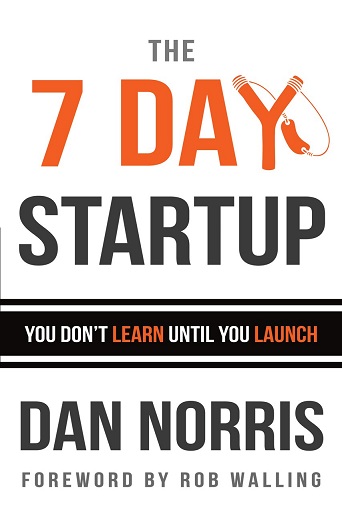
Dan Norris’s The 7 Day Startup isn’t just another business book—it’s a high-impact, no-excuses guide for entrepreneurs who are tired of overthinking and ready to launch fast. If you’ve ever waited months—if not years—trying to perfect a business idea before going public, this book will challenge everything you thought you knew about starting up. In this The 7 Day Startup Summary, we’ll explore Norris’s core principles, lessons, and actionable strategies designed to help entrepreneurs move from ideation to execution—in just seven days.
Introduction: Why Launch Now, Not Later?
At the heart of The 7 Day Startup lies a powerful belief: businesses don’t become real until they launch. Norris argues that execution trumps perfection every time. He makes it clear that entrepreneurs waste too much time validating ideas instead of testing them in the real world. His premise? The only way to test a business idea is to build it.
Whether you’re a freelancer dreaming of a scalable company or a solopreneur with too many ideas and no traction, Norris shows you how to cut through the noise and ship something of value quickly.
Key Ideas from The 7 Day Startup
Here are some of the biggest takeaways from the book:
- Launch first, learn fast. You won’t gain real insights until you release your product or service into the world.
- Focus on what brings customers. Time should be invested in marketing and customer acquisition—not on tasks you naturally enjoy but don’t generate income.
- The difference between an idea and a business is revenue. Validation without payment is empty.
- Build what people are already paying for. Solve real, monetizable problems in the market.
- Passion matters—but only if it’s tied to growing a business. Doing what you love is good, but sustainable entrepreneurship requires deep interest in scaling and problem-solving.
The 9 Elements of a Strong Business Idea
Before rushing into launch mode, Norris provides a framework to filter out weak ideas. A solid bootstrapped business, he explains, should include:
- Daily tasks you enjoy – Sustainability comes from loving the work.
- Product/founder fit – Your strengths should align with your product.
- Scalable model – Can the business grow beyond you?
- Profitability without the founder – A real business works even when you step away.
- Resalable asset – Build something that holds value over time.
- Large market potential – Ensure enough demand exists.
- Real customer pain/pleasure – Tap into deep emotions or needs.
- Marketing edge – A unique lead generation channel helps early traction.
- Quick launch capability – Avoid complex setups that slow progress.
Building a Minimum Viable Product (MVP)
A common startup trap is obsessing over product features before talking to customers. Norris flips this script. He encourages entrepreneurs to:
- Forget automation early on. Do everything manually until you prove demand.
- Get paid within 7 days. If you can’t convince someone to buy in a week, reassess.
- Test your assumptions. Launching is about learning, not perfecting.
Helpful MVP questions from Norris include:
- What can I do manually instead of automating?
- How close is my MVP to the final vision?
- What’s the simplest version of this that still provides value?
- What would make this offer feel real to a paying customer?
Branding and Naming Tips
Your business name might feel like a small detail, but Norris offers practical rules to ensure it doesn’t become a bottleneck:
- Keep it short and easy to pronounce (ideally under 12 characters).
- Choose something broad to allow future flexibility.
- Make sure the domain is available.
- Ask yourself: “Do I like saying this name out loud?”
These considerations are aimed at helping founders move quickly without getting stuck in analysis paralysis.
Marketing That Matters
Launching a startup means becoming your own best marketer. Norris lists 10 proven ways to get your business in front of potential customers:
- Content marketing (blogs, videos, guides)
- Email marketing
- Podcasting
- Forums and online communities
- Guest posting on relevant sites
- Listing on directories
- Hosting webinars
- Giving live presentations
- Offering free samples or services
- Seeking press and media coverage
The goal isn’t to master them all at once, but to double down on what brings real leads and paying customers. As Norris puts it, “Momentum is a powerful force, so keep an eye out for what’s working and do more of it.”
The 7-Day Action Plan
The core structure of the book is built around an actionable 7-day launch schedule:
- Day 1: Brainstorm & Evaluate – Generate ideas and validate them using the 9 elements checklist.
- Day 2: Define Your Offer – Clarify exactly what you’re selling and what the customer receives.
- Day 3: Pick a Name – Choose a simple, memorable, and relevant name. Secure the domain.
- Day 4: Build a Website – Create a basic site that communicates your value clearly.
- Day 5: Prepare Marketing Channels – Plan your launch strategy with a shortlist of effective marketing methods.
- Day 6: Set Business Metrics – Create a spreadsheet forecasting users, revenue, costs, and growth.
- Day 7: Launch – Go live and start executing your plan. Get feedback and iterate.
This framework eliminates the guesswork and perfectionist delays. It gives founders a lean blueprint to go from nothing to launched in one week.
Final Thoughts: A Mindset Shift for Modern Entrepreneurs
In The 7 Day Startup, Dan Norris doesn’t promise overnight success—but he does promise clarity and momentum. The book is a wake-up call for dreamers who spend more time planning than doing. It encourages aspiring founders to embrace imperfection, launch fast, learn quicker, and focus on what really matters: solving problems people will pay for.
You don’t need a fully automated system, a polished product, or a massive team to get started. What you need is drive, clarity, and the courage to launch something real.
Who Should Read The 7 Day Startup?
This book is a must-read for:
- Aspiring entrepreneurs stuck in planning mode
- Freelancers transitioning into scalable business models
- Solopreneurs looking to validate their ideas quickly
- Creators interested in bootstrapping a product or service-based startup
- Anyone who needs a concrete action plan to launch now
The 7 Day Startup Summary offers a fast-track blueprint for turning your business idea into reality. If you’ve been waiting for the right moment, this is it. Start small, start fast, and most importantly—just start.