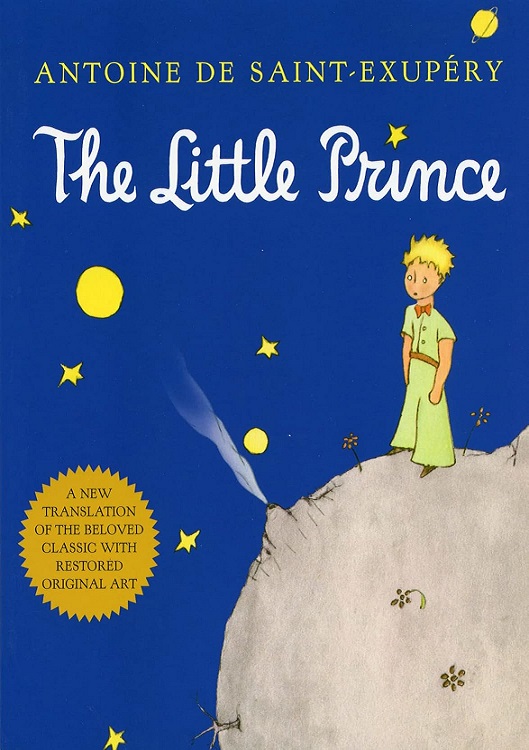
How do you explain the complexities of human life to a child? Do you turn to science books or encyclopedias? Or maybe, just maybe, you offer them a story—one that distills life’s greatest truths into a tale they can feel in their hearts. That’s exactly what The Little Prince achieves.
In this The Little Prince Summary, we explore Antoine de Saint-Exupéry’s legendary novella that, despite its brevity, manages to hold a mirror up to adulthood, identity, imagination, and love. First published in 1943 and written during the turbulence of World War II, this enchanting story has reached readers in over 500 languages, selling more than 200 million copies worldwide.
Beneath its whimsical surface lies a profound commentary on modern life, offering life lessons not just for children, but for every adult who has forgotten what it means to see the world with curiosity, heart, and soul.
About the Author: A Poet, Pilot, and Philosopher
Antoine de Saint-Exupéry was more than a writer—he was a French aviator, poet, and philosopher who wove his life experiences into his storytelling. Flying reconnaissance missions during WWII, Saint-Exupéry had a front-row seat to the chaos and contradictions of humanity. His philosophical frustrations with society, materialism, and the loss of childlike wonder echo throughout The Little Prince.
The author tragically disappeared during a flight in 1944 at the age of 44. Yet through The Little Prince, his legacy lives on—reminding us of the beauty of simplicity and the importance of inner vision.
Plot Overview: A Story That Speaks to the Heart
The story begins with a narrator, a pilot who crash-lands in the Sahara Desert. There, he meets a mysterious boy with golden hair—the little prince—who asks him to draw a sheep. What follows is a deeply symbolic journey through the prince’s past and the lessons he’s gathered while traveling from one tiny planet to another.
The novella seems simple on the surface, but with every page, Saint-Exupéry peels back the layers of adulthood, pride, love, and loss. The interactions between the prince and the beings he meets along the way serve as allegories for the challenges and illusions of modern adult life.
Key Lessons from The Little Prince
1. Imagination Is the Lens Through Which We Understand Life
The opening chapter sets the tone: the narrator recalls showing adults a drawing of a boa constrictor digesting an elephant, which they mistake for a hat. This simple misunderstanding underscores a major theme—adults often lose their sense of imagination and, with it, the ability to see beyond the surface.
When the little prince appears in the desert, he immediately understands the drawing, proving that true insight requires imagination, not just intellect. His satisfaction with a sketch of a box—because he imagines the sheep inside—further drives home the idea that what we perceive depends on our inner vision.
Takeaway: Knowledge may inform us, but imagination transforms us. Don’t lose your childlike curiosity; it’s the key to finding meaning in life’s ordinary moments.
2. Adulthood Is a Trap—If We Let It Be
Throughout his interplanetary travels, the little prince meets six adults—each a caricature of modern flaws:
- A king obsessed with control,
- A vain man desperate for praise,
- A drunkard who drinks out of shame,
- A businessman obsessed with ownership,
- A lamplighter caught in blind routine,
- And a geographer who knows everything about the world but has never experienced it.
Each character represents how adulthood often leads to ego, emptiness, and mechanical living. These vices strip us of curiosity, empathy, and perspective.
Takeaway: Recognize these adult “ruts.” Reflect, stay self-aware, and challenge the patterns that no longer serve you. Adulthood doesn’t have to mean losing your soul.
3. What Truly Matters Is Invisible to the Eye
The emotional core of The Little Prince lies in his relationship with a rose on his home planet. At first, he thinks she is unique—until he sees a whole garden of roses on Earth. He’s devastated. But a fox he befriends teaches him a crucial truth: it’s the time and love we invest in someone that makes them special.
“It is only with the heart that one can see rightly; what is essential is invisible to the eye,” the fox tells him.
In the end, the little prince sacrifices his physical form—by allowing a snake to bite him—so he can return to his beloved rose. Whether he dies or transcends is left open-ended, emphasizing the power of personal interpretation and emotional truth.
Takeaway: Love, connection, and meaning can’t be measured or seen—they’re felt. The more we cultivate these intangible values, the richer our lives become.
The Little Prince Chapter Summary Highlights
- Desert crash: The narrator meets the prince after his plane malfunctions, mirroring Saint-Exupéry’s real-life crash in the Libyan desert.
- The rose: Symbolizes fragile love, pride, and misunderstandings.
- The fox: Represents the beauty and pain of relationships.
- The planets: Each adult figure symbolizes a flaw in modern life.
- The finale: The prince’s sacrifice invites us to question life, death, and the soul’s journey.
Critical Review: Why The Little Prince Remains Timeless
Strengths:
- Beautiful, poetic writing that appeals to all ages.
- Deeply layered metaphors on life, love, and loss.
- Simple storytelling with profound emotional weight.
- Unique illustrations that enhance the whimsical charm.
Areas for Improvement:
- For readers unfamiliar with allegory, the symbolism may feel obscure or overly abstract.
- The open-ended finale can be confusing for those seeking narrative closure.
Who Should Read The Little Prince
- Parents and educators: A perfect tale to spark emotional intelligence in children.
- Philosophical readers: Those seeking meaning beneath the surface of everyday life.
- Creative thinkers: Artists, dreamers, and those rekindling imagination.
- Travel and aviation enthusiasts: The pilot narrator and the aviation metaphors will resonate deeply.
Final Thoughts: A Heartfelt Tribute to the Essentials of Being Human
The Little Prince is more than a book—it’s a spiritual guide wrapped in a children’s tale. It asks us to slow down, listen, reflect, and most of all, to see with our hearts. In a world filled with distractions, ego, and surface-level values, this story reminds us that love, time, and kindness are what truly matter.
If you’ve ever felt the pull to reconnect with your inner child, or question what you’re really living for, The Little Prince is the story you need.
Frequently Asked Questions
Is The Little Prince a children’s book or for adults?
It’s both. Children enjoy its surface story, while adults uncover deeper layers of meaning with each re-read.
How long does it take to read?
With under 100 pages, most readers finish it in 1–2 hours—but its impact can last a lifetime.
What are the key messages in The Little Prince?
Imagination is essential, adulthood can obscure what matters, and love is found in the invisible, emotional bonds we create.
What makes this book so special?
Its ability to speak to people of all ages, cultures, and backgrounds about the universal themes of love, loss, and purpose.
Ready to Rediscover the Magic of Life?
Pick up The Little Prince and experience the quiet power of seeing the world—not just with your eyes, but with your heart.
Explore more timeless stories on Books to Thrive – where literature meets life.