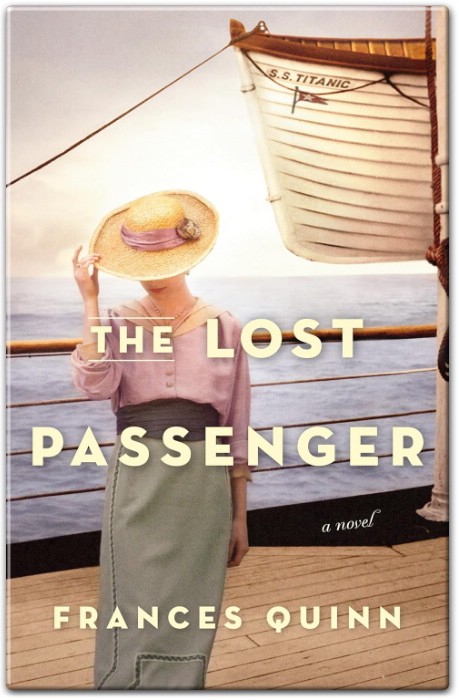
Frances Quinn’s The Lost Passenger is not just a historical novel—it’s a profound exploration of self-liberation, social injustice, and the enduring will to survive. In this The Lost Passenger Summary, we unravel the powerful story of a woman who fakes her death aboard the Titanic to escape a suffocating aristocratic life, only to be reborn in a foreign land as she fights for her freedom, her children, and her identity.
A Unique Spin on the Titanic Narrative
Unlike many novels centered on the Titanic, The Lost Passenger shifts the focus away from the infamous maritime tragedy and zeroes in on what happens after the iceberg. The sinking of the ship is just the starting point. For protagonist Elinor Coombes, it’s not just a disaster—it’s an opportunity. An opportunity to reclaim her life, her voice, and her future.
Through Elinor’s eyes, readers are transported into a world where class, gender, and power collide—and survival means more than just staying alive. It means choosing who you want to be, no matter what society expects of you.
Plot Overview: Who Is the Lost Passenger?
Elinor Hayward, later known as Nora, is born into English industrial aristocracy. Her marriage to Frederick Coombes is a social transaction—an arrangement designed to uphold family reputations and fortunes. But what Elinor discovers is a loveless, emotionally abusive partnership dictated by control and hierarchy. Even access to her infant son, Teddy, is limited by the cold hands of patriarchy.
When Elinor’s father gifts her Titanic tickets, it seems like a brief escape. But when disaster strikes at sea, she makes a radical choice: to disappear into presumed death. In that moment, she becomes the lost passenger, not in the physical sense, but emotionally and symbolically—leaving behind one identity to claim another.
Starting Over in New York: Reinvention in the Shadows
Arriving in 1912 New York with her son under a fabricated identity, Elinor (now Nora) begins her journey not as a lady of wealth, but as a working-class immigrant. Every step she takes is layered with uncertainty—financial hardship, fear of being discovered by her aristocratic husband or his powerful family, and the struggle of forging a new path in an unfamiliar, often unkind world.
Nora finds solace and strength among fellow factory workers, particularly Maura, who becomes her confidante and emotional anchor. Her decision to adopt an abandoned child, Tommy, further underscores her commitment to build a family defined by love and choice—not status or bloodline.
Central Themes in The Lost Passenger Summary
1. The Clash Between Identity and Society
Elinor’s evolution into Nora is the novel’s most compelling arc. Her transformation captures the painful yet liberating act of breaking free from roles society imposes on women—especially within the rigid expectations of upper-class England.
2. Marriage as Power and Patriarchy
Frederick Coombes and Lady Storton are more than antagonists—they’re representations of a system that commodifies women. Elinor’s marriage reflects a broader critique of patriarchal norms, where a woman’s value is tied to her obedience and silence.
3. Rebirth from Catastrophe
The Titanic is more than a disaster in this story—it’s a symbol of opportunity. Elinor’s survival becomes a metaphor for emotional and social rebirth. From the literal wreckage of one life, she begins another.
4. Feminist Solidarity and Social Change
Nora’s involvement in labor activism and suffrage is a natural extension of her personal journey. Through friendships with working-class women, she not only reclaims her voice but amplifies the collective voice of marginalized women during the early 20th century.
Main Characters: Voices that Define the Journey
- Elinor Coombes / Nora – The protagonist. A mother, survivor, and activist who evolves from a trapped aristocrat into an empowered immigrant.
- Frederick Coombes – Elinor’s manipulative husband, the embodiment of patriarchal control.
- Lady Storton – Elinor’s mother-in-law, representing the icy cruelty of old aristocratic values.
- Teddy – Elinor’s biological son, a symbol of hope and the reason behind her reinvention.
- Tommy – A child she adopts, representing chosen love and compassion.
- Maura – A working-class woman and Elinor’s closest ally in New York.
Reader Reactions: What Critics and Fans Are Saying
Across platforms like Goodreads and Amazon, readers praise Frances Quinn’s emotional storytelling, layered character development, and historical richness.
Many are drawn to Elinor’s extraordinary courage and the narrative’s focus on rebuilding life after trauma. Rather than spotlighting the sinking of the Titanic itself, Quinn explores what it means to rebuild from the ashes of disaster—emphasizing healing, reinvention, and resilience.
Some reviewers note the novel’s slower pacing in certain parts, but most agree this deliberate rhythm deepens immersion into the time period and character psychology.
Why The Lost Passenger Deserves a Spot on Your Shelf
If you enjoy:
- Historical fiction centered around real-world events like the Titanic.
- Strong female leads breaking away from restrictive roles.
- Themes of survival, feminism, and identity.
- Stories that blend personal drama with social movements such as labor rights and women’s suffrage.
Then The Lost Passenger offers all of this and more—crafted with emotional intelligence and historical insight.
Life Lessons from The Lost Passenger
- You can reinvent yourself no matter your circumstances. Elinor’s transformation shows us the power of starting over—even when the world thinks you’re lost.
- Challenge oppressive systems. Whether it’s aristocracy or gender norms, the novel encourages resistance through action.
- Build families based on love, not blood. The bonds Elinor forms are chosen, not inherited—and often stronger for it.
- Solidarity is a force multiplier. From factory floors to protest lines, women supporting women drives true change.
FAQs Answered by The Lost Passenger Summary
1. How did Titanic survivors start over after the disaster?
The novel explores the emotional and social complexities of rebuilding life post-tragedy.
2. What were women’s roles in early 20th-century aristocracy?
Often confined to marriage and motherhood, with little agency or independence.
3. Can tragedy spark empowerment?
Elinor’s story is proof that personal catastrophe can birth personal revolution.
4. What was the role of immigrant women in early labor movements?
Pivotal—especially in factories where community and activism were forged.
5. How does identity evolve when one escapes societal roles?
Nora’s identity as an immigrant is richer and more autonomous than her former life as Elinor.
Final Thoughts: The Lost Passenger Summary
The Lost Passenger is more than a historical novel—it’s a meditation on freedom, identity, and the resilience required to reclaim both. Frances Quinn weaves a tale that is equal parts heartbreaking and hopeful, reminding readers that the human spirit is capable of remarkable transformation.
Whether you’re drawn to historical fiction, feminist narratives, or stories of starting over, this novel delivers a powerful, unforgettable experience. Dive into The Lost Passenger and witness how one woman redefines her destiny in a world determined to write it for her.
Get your copy of The Lost Passenger by Frances Quinn today and be inspired by a story where every ending is a new beginning.